
1-906-774-0098

2026 Best Cargo Electric Bikes for Global Buyers

The 2026 Best cargo electric bikes for Global Buyers guide examines practical transport, not showroom excitement. A cargo electric bike must carry children, groceries, tools, or parcels safely across changing streets and weather. It should also remain manageable when the battery is empty.

Mikael Colville-Andersen, an urban mobility expert, has said, “The bicycle is the most efficient machine ever created.” His observation becomes more meaningful when electric assistance meets real cargo demands. A strong motor helps on steep roads. A stable frame matters when a loaded front box turns slowly. Reliable brakes matter even more near crowded crossings.

This guide compares carrying capacity, motor response, battery range, charging time, weather protection, and repair access. It also considers frame height, wheel size, passenger restraints, lighting, and available accessories. These details often decide whether a bike works daily or stays unused beside the garage.

Global buyers face different roads, climates, service networks, and technical requirements. Therefore, no single model can be the best everywhere. A long-range battery may help in rural areas, while compact handling may matter more in dense cities. Some advertised ranges look impressive, but real payloads, hills, cold temperatures, and frequent stops reduce them.

We will question optimistic claims. We will also acknowledge an uncomfortable limitation: electric cargo bikes are not automatically affordable, effortless, or sustainable. Their value depends on maintenance, battery replacement, local support, and genuine daily use. The right choice is not the most powerful model. It is the one that fits your route, load, budget, and ability to keep it working.
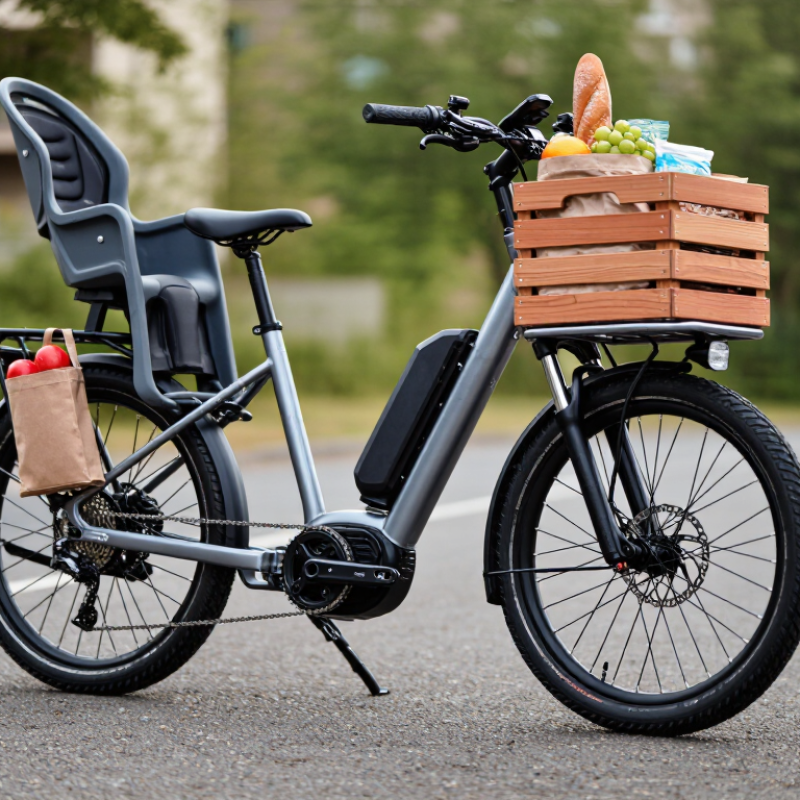
2026 Best Cargo Electric Bikes for Global Buyers

Global Cargo E-Bike Market: 2026 Demand and 20–30% Delivery Potential

2026 Best Cargo Electric Bikes for Global Buyers

Global cargo e-bike demand is moving beyond personal transport. In 2026, retailers, pharmacies, food operators, and local couriers may increase demand for compact delivery vehicles. A realistic opportunity is replacing 20–30% of suitable urban delivery trips with cargo e-bikes. This potential depends on route length, weather, road access, and charging availability. It does not represent the entire delivery market.

Practical testing matters more than catalogue claims. Buyers should inspect payload capacity, frame stability, battery safety, braking performance, and spare-part access. A 500-kilogram daily workload feels very different on flat streets than on steep roads. Smaller wheels can improve maneuverability, but they may reduce comfort on rough surfaces. Weather protection also matters. A wet driver loses time and concentration.

Tips: Map delivery routes before ordering. Measure doorways, lifts, storage areas, and charging points. Ask suppliers for verified test data and service procedures. Confirm local certification requirements with qualified authorities. Do not assume one battery supports a full working day; cold temperatures and heavy loads reduce range. The 20–30% delivery estimate is useful, but imperfect. Some cities may achieve more, while others may achieve far less. Pilot operations with a few vehicles first, then compare delivery time, maintenance cost, and rider feedback. Small errors become expensive when a fleet expands.

2026 Best Cargo Electric Bikes for Global Buyers

Global cargo e-bike market: estimated 2026 delivery potential by use case

The chart presents a planning range rather than reported company sales. The 20–30% range represents the estimated share of suitable urban delivery trips that could be technically served by cargo e-bikes in dense, short-distance operating environments, subject to payload, charging access, road conditions, weather, and local regulations.

Legal Standards Compared: EU 250 W/25 km/h and U.S. 750 W/28 mph Limits

2026 Best Cargo Electric Bikes for Global Buyers

Legal rules can change a cargo bike’s usefulness more than its battery size. In the European Union, a standard pedal-assisted cycle generally uses a motor rated at 250 watts or less. Assistance must stop before the bicycle reaches 25 km/h. The rider must pedal, and the motor should not propel the bicycle independently. A loaded bike may slow sharply on hills, even when its display shows a full battery.

In the United States, the federal low-speed electric bicycle definition allows up to 750 watts. Motor assistance must stop before 20 mph when operating without pedaling, while pedal assistance may reach 28 mph under Class 3 rules. However, state and city regulations can differ. Throttle use, bike-lane access, helmet requirements, and age limits deserve a local check. The 28 mph figure is not a universal permission for every cargo model.

Global buyers should inspect the technical file, not only the marketing label. Check continuous rated power, assisted speed, throttle behavior, brakes, lighting, and charger certification. Ask whether the supplied settings match the destination market. A heavy load changes stopping distance; test it with groceries or a child-seat equivalent before regular use. Some displays may show peak power, which can confuse comparisons. I have seen buyers focus on watts and overlook registration rules. That mistake is easy to repeat.

Performance Benchmarks: Payload, Range, Motor Torque, and Battery Capacity

2026 Best Cargo Electric Bikes for Global Buyers

For global buyers, cargo-bike performance starts with payload, not marketing speed. A capable model should clearly state its certified load rating, including rider, cargo, and accessories. Real testing should use a measured load, stop-and-go streets, hills, and uneven pavement. A 180-kilogram rating feels useful only when braking remains controlled. That detail is often overlooked.

Motor torque matters most when starting uphill or carrying dense cargo. Around 60–90 Nm can provide confident launches, though controller tuning affects the feeling. Battery capacity should be judged in watt-hours, not amp-hours alone. A 700 Wh battery may support practical daily work, but range changes with temperature, tire pressure, payload, and headwinds. Published range is rarely a promise. I still question any test completed on flat, empty roads.

Tips: Compare watt-hours, torque, and payload together. Ask for test conditions. Check whether the stated load includes the rider. For international use, confirm charger compatibility, battery certification, warranty support, and local electric-bike limits. Measure your actual route with a full load. Small hills expose weak systems quickly. Allow a reserve of 20–30 percent, especially in cold climates. That reserve may feel excessive, yet it prevents inconvenient charging stops.

Safety Certification Guide: UL 2849, EN 15194, IP Ratings, and Braking Tests

For global cargo-bike buyers, certification should be verified before comparing motors, racks, or payload claims. UL 2849 evaluates the complete electrical system, including the battery, charger, wiring, and control unit. Ask for the laboratory certificate, not only a printed compliance logo. The U.S. Consumer Product Safety Commission reported about 19,700 micromobility injuries in 2022. That figure covers several vehicle types, but it shows why electrical safety deserves attention.

EN 15194 applies to electrically assisted cycles in the European market. It addresses power limits, assistance cut-off, construction, and braking performance. A compliant cargo bike should stop predictably with its rated load, not only with an empty box. Wet tests matter. Buyers should request repeated stopping results, brake-fade observations, and test conditions. Local rules may add requirements beyond EN 15194, especially for heavier commercial cargo models.

IP ratings follow IEC 60529 and describe resistance to dust and water entry. IPX4 suggests protection from splashing, while IPX5 involves water jets. Neither rating proves safe immersion or long-term corrosion resistance. Check whether the rating covers the battery, display, connectors, and charger separately. Labels can mislead. In pre-shipment inspections, I would examine cable seals, connector caps, tire clearance, and brake adjustment after loading. Safety documents are useful, but they can still miss poor assembly or careless maintenance. That uncomfortable gap deserves attention.

2026 Best Cargo Electric Bikes for Global Buyers - Safety Certification Guide: UL 2849, EN 15194, IP Ratings, and Braking Tests

Evaluation Area Recommended Benchmark for Cargo E-Bikes What Buyers Should Verify Safety Meaning
UL 2849 electrical-system certification A complete e-bike electrical system evaluated to UL 2849, including the battery, charger, motor, wiring, controls, and charging circuitry. Request a current certificate or test report that identifies the exact battery, charger, motor-control system, and model configuration. Helps address risks such as electric shock, abnormal charging, overheating, and fire. UL 2849 does not replace mechanical, lighting, or braking tests.
Battery and charger compatibility Battery voltage, charger output, connector type, battery-management system, and charging instructions must match the tested configuration. Check that the charger is supplied or approved for the battery and that replacement batteries are identified by part number and electrical rating. Using an unapproved charger or battery can bypass protective controls and increase overheating or fire risk.
EN 15194 conformity for the European market For a standard EPAC configuration: pedal assistance, maximum continuous rated motor power of 250 W, and assistance cut-off at 25 km/h. Request the EU Declaration of Conformity and confirm that the tested configuration matches the delivered cargo-bike version. Supports classification as a conventional electrically assisted pedal cycle in applicable European markets. Faster or more powerful versions may fall under different vehicle rules.
European electrical limits For the usual EN 15194 EPAC category, the electrical system is generally limited to a maximum 48 V DC supply and 250 W maximum continuous rated power. Check the technical file, rating plate, battery voltage, motor continuous rated power, and assistance cut-off speed. Prevents a product marketed as a standard EPAC from being assessed against the wrong legal category.
Mechanical load capacity Select a model whose maximum gross vehicle mass covers the rider, cargo, accessories, battery, and child-seat or passenger equipment. A practical cargo-bike range is often approximately 180–250 kg gross mass, but the manufacturer limit controls. Verify separate limits for total gross mass, front rack, rear rack, cargo box, passenger seat, wheel, and axle. Overloading can reduce braking performance, increase frame fatigue, and affect steering stability.
Brake-system configuration Independent front and rear brakes, with braking capacity designed for the declared maximum gross mass. Hydraulic disc brakes are commonly preferred for heavy or hilly-duty cargo use. Confirm rotor diameter, pad type, brake-cutoff function, cable or hose routing, parking brake where fitted, and service-parts availability. A redundant two-wheel braking system provides better control if one brake becomes less effective or requires maintenance.
Braking performance test A documented test should cover the complete production configuration at the declared maximum gross mass, using the applicable EN 15194 and referenced bicycle-braking test methods. Ask for test conditions, initial speed, surface, gradient, rider or test load, stopping distance, control force, wet-condition results where applicable, and repeatability data. A brake claim is meaningful only when the tested mass, speed, surface, and equipment match the cargo bike being purchased.
IP rating for battery enclosure IP54 or higher is a useful baseline for routine outdoor use; IP65 or IP66 offers stronger protection against water jets when properly sealed. Confirm the rating applies to the complete installed enclosure, including seals, charging port, cable entries, and covers. The first digit concerns solid-particle protection; the second concerns water protection. An IP rating does not automatically mean the bike may be submerged.
Useful IP-code reference IPX4: splashing water; IPX5: water jets; IPX6: powerful water jets; IP67: dust-tight plus temporary immersion under defined laboratory conditions. Check whether the rating is for the battery, motor, display, controller, or entire vehicle; these components may have different ratings. Do not pressure-wash connectors or charge a wet battery unless the operating instructions explicitly permit it.
Lighting and visibility White front and red rear lamps, reflectors, side visibility, and any market-specific lighting requirements should be supplied or clearly specified. Verify legal conformity for the destination country, lamp power or approval marking, mounting height, wiring protection, and operation with the battery switched on. Cargo boxes and rear loads can obstruct standard bicycle lighting, so placement and side visibility are important.
Stability and steering A stable wheelbase, secure parking stand, steering limiter where appropriate, and controlled low-speed handling under rated load. Test loading, unloading, tight turns, stand deployment, curb transitions, and steering clearance with the intended cargo. High or unevenly distributed loads can increase rollover risk and make low-speed steering more difficult.
Battery transport and service documentation Clear battery identification, charging instructions, storage limits, replacement procedure, recycling information, and shipping documentation. Request the battery chemistry, watt-hour rating, safety instructions, UN 38.3 transport test evidence, and local end-of-life handling process. Transport and recycling requirements are separate from UL 2849 or EN 15194 compliance and may vary by destination.
Recommended global-buyer documentation package Declaration of Conformity where applicable, UL 2849 evidence for North American sales, battery and charger specifications, IP test evidence, brake test report, user manual, and spare-parts list. Match every document to the exact frame, battery, charger, motor, brake, and maximum-mass configuration being ordered. Complete, model-specific documentation is more reliable than generic certificates or marketing statements.

Note: Certification and legal requirements vary by country, vehicle category, and intended use. Always confirm the current requirements with the destination-market authority or a qualified conformity-assessment professional.

Buyer Selection Matrix: Family, Commercial, Fleet, and Last-Mile Applications

2026 Best Cargo Electric Bikes for Global Buyers

A useful buyer matrix starts with the job, not the motor size. Family users need stable handling, weather protection, and child-safe seating. A low step-through frame matters during school runs. Commercial buyers should check payload, loading width, brake durability, and battery access. The International Energy Agency’s Global EV Outlook 2024 reports that electric two- and three-wheelers represent the largest electric vehicle segment worldwide. That signals scale, but not universal suitability. Roads, hills, climate, and service access still change the decision.

For fleet operators, uptime deserves more attention than catalogue range. Compare battery charging time, spare-part availability, telematics compatibility, and technician training. The World Bank has repeatedly identified urban freight efficiency as a major transport priority, especially where congestion raises delivery costs. Last-mile buyers should test a loaded bike on real routes. A 150-kilogram payload behaves differently on wet pavement and steep streets. It is easy to overvalue battery capacity. Daily route length, stop frequency, rider weight, and cargo volume often matter more.

Measure the route first. Then compare. A family model may suit light retail work, but repeated commercial loading can expose weak racks or hinges. Fleet procurement also needs clear replacement policies and local warranty support. Data from the European Cyclists’ Federation indicates that cargo bikes can complete many dense urban deliveries faster than vans, particularly where parking is limited. The finding is useful, though conditions vary. A clean spreadsheet cannot predict every curb, pothole, or rider habit. Trial results should outweigh optimistic specifications.