A pool solar panel can extend swimming season without the fuel costs of conventional heating. But “best” depends on more than brand or price. Climate, pool size, roof orientation, shading, and pump capacity all affect real-world performance. A collector that warms a small, sunny pool may disappoint beside a larger, shaded one.
The U.S. Department of Energy’s solar pool-heating guidance recommends collector areas roughly equal to 50–100% of the pool’s surface area. That range is a useful starting point, not a guarantee. Local sunlight matters, too. NREL’s National Solar Radiation Database provides location-based solar resource data that can help homeowners assess exposure before comparing systems. Even a roof with good afternoon sun may lose useful production to nearby trees or seasonal shade.
Small details count. Look at panel materials, flow requirements, freeze protection, warranty terms, and compatibility with your existing pump. A low sticker price can conceal extra plumbing or installation costs. And payback estimates deserve scrutiny; assumptions about fuel prices, weather, and swimming habits can change the result. A neat ranking can still mislead. In this guide, we compare pool solar panel options for 2026 using practical sizing considerations, available performance information, and installation factors. The goal is not to promise the warmest water everywhere, but to help you identify a system suited to your pool and local conditions.
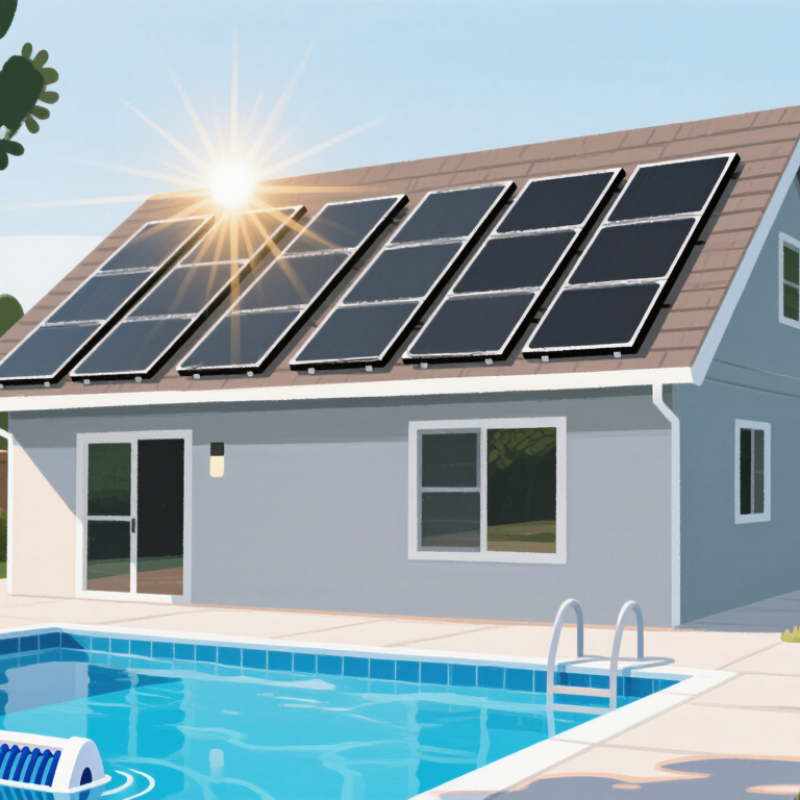
Pool solar panels heat water by circulating it through sun-warmed collectors. A pump moves filtered pool water into narrow channels beneath dark, durable panels. Sunlight warms the collector, and the water carries that heat back to the pool. The loop continues while the pump runs and useful sunlight reaches the panels. No flame is involved. This differs from photovoltaic panels, which produce electricity rather than directly warming pool water.
In many systems, a diverter valve routes water from the filter to roof- or ground-mounted collectors, then returns it to the pool. The added resistance can affect flow, so collector area, pipe layout, and pump settings matter. A sunny roof with little shade usually helps, but orientation and local weather also influence performance. A few degrees of gradual warming is more realistic than expecting bath-like heat after one afternoon.
Heat does not stay put. Wind, cool nights, and evaporation can quickly pull warmth from an uncovered surface; a pool cover can reduce that loss. Check that collectors drain as intended during cold periods, and ask an installer to size the system for your pool and climate. It is easy to blame the panels after a cloudy week, though the real issue may be poor sun exposure or heat escaping overnight. Even a well-designed setup has limits.
Pool solar collectors mainly fall into two groups: unglazed and glazed. Unglazed collectors use dark polymer tubes or panels without a glass cover. Pool water flows through them and warms in sunlight. They are often a practical match for seasonal use in mild, sunny climates. On a hot afternoon, their simple design can be enough. But performance drops when air is cold or wind strips heat from the panel.
Glazed collectors add a glass cover and often use metal absorber plates. The enclosure reduces heat loss, making them more useful in cooler weather or for longer swimming seasons. Evacuated-tube collectors are another option, though they are more common in hot-water systems than pool heating. Their higher-temperature design may be unnecessary for a pool. That matters. The U.S. Department of Energy’s Energy Saver guide puts typical solar pool-heating installation costs at about $3,000–$4,000, with estimated payback of 1.5–7 years; actual results depend on climate, fuel prices, and use. Those figures cover systems broadly, not each collector type. A tidy comparison can hide local differences. Check collector ratings, roof exposure, and pool size before choosing.
In 2026, the best pool solar panel is the one sized for your pool, climate, and swimming season. Pool heating usually uses solar thermal collectors, not household photovoltaic panels. Measure the pool’s surface area, then compare it with the collector area recommended for your local conditions. Roof direction, shade, wind, and available mounting space all affect real-world output. A sunny roof helps, but it is not the whole story.
Ask for tested performance data, not just broad efficiency claims. The Solar Rating & Certification Corporation’s OG-100 program tests solar thermal collectors under standardized conditions, giving buyers a more consistent basis for comparison. Check the collector’s materials, warranty, plumbing compatibility, and protection against freezing or overheating. Fit matters. I would still double-check any sizing estimate based on average sunshine; a shaded roof or windy yard can change the result.
Operating habits matter, too. The U.S. Department of Energy reports that a pool cover can reduce pool-heating costs by 50%–70%, because it limits heat loss. That figure is a useful benchmark, not a guarantee for every pool. Consider whether you will cover the water nightly, how long you want to extend the season, and whether a pump can move water through the collectors at the required flow. A system that looks powerful on paper may disappoint if the plumbing or controls are poorly matched.
| Factor | What to Compare | Practical Guidance | Why It Matters |
|---|---|---|---|
| Collector type | Unglazed polymer collectors versus glazed collectors | Unglazed collectors are commonly used for seasonal pool heating in mild or warm climates. Glazed collectors can be more suitable where cooler weather or year-round heating makes heat retention more important. | The appropriate collector depends on climate, desired swimming season, and system cost—not on a single universally “best” panel. |
| Collector area | Total panel area compared with the pool’s surface area | A common starting point for pool-heating estimates is collector area around 50%–100% of the pool’s surface area. Cooler conditions, windy sites, or a longer swimming season may require more area. | Too little collector area can limit heating performance. A qualified installer can refine the estimate using local weather, shade, and pool-use patterns. |
| Local climate and sunlight | Average sunshine, outdoor temperatures, wind, and seasonal conditions | Solar pool heating generally performs best with strong sunlight and an extended warm season. Shading and frequent cool, windy conditions can reduce heat gains. | Local conditions influence both the amount of heat available and the collector area needed. |
| Roof or ground space | Available unshaded area, orientation, roof pitch, and structural suitability | Choose a layout with good sun exposure and enough room for the planned collector area. Have roof condition and loading suitability assessed before installation. | Even an appropriately sized system may underperform if the collectors are shaded or cannot be safely installed. |
| Pool cover | Whether a cover will be used when the pool is not in use | A pool cover can reduce evaporation and heat loss, especially overnight. It complements solar collectors but does not replace correct system sizing. | Evaporation is a major source of heat loss from swimming pools, so limiting it can improve overall heating efficiency. |
| Hydraulic compatibility | Required flow rate, pipe sizing, pump capacity, and plumbing arrangement | Confirm that the collector system is designed for the pool’s circulation equipment and includes appropriate controls and isolation valves. | Incorrect flow or plumbing can reduce performance and may place unnecessary strain on the circulation system. |
| Materials and exposure | Resistance to ultraviolet light, pool chemicals, weather, and freezing conditions | Check the product specifications for outdoor UV exposure, water-chemistry compatibility, and any required winterizing or drain-down procedure. | Exposure and maintenance conditions affect service life. Freezing water in collectors or pipes can cause damage. |
| Controls and operation | Temperature sensing, automatic flow control, and seasonal shutdown options | Controls should circulate pool water through the collectors when useful heat is available and bypass them when heating is not beneficial. | Appropriate controls help maintain practical operation and avoid circulating water through collectors when conditions are unfavorable. |
| Installation and maintenance | Installer experience, access for inspection, and upkeep requirements | Request a system design that explains collector placement, plumbing, winterization, and routine inspection needs. Follow the manufacturer’s maintenance instructions. | Installation quality and correct seasonal care are important to dependable performance and equipment longevity. |
| Best-fit choice | Match the system to climate, pool use, available space, and budget | For many seasonal outdoor pools in warm or mild climates, an appropriately sized unglazed polymer system is a practical starting point. Consider glazed collectors where cooler conditions or a longer heating season justify them. | The best choice is the system that meets the pool’s heating goals under local conditions, rather than the panel with the highest isolated specification. |
Choosing the best pool solar panel in 2026 depends less on a headline efficiency figure than on how well the system fits your pool. Sun exposure, roof direction, shade, and plumbing all affect heat output. A panel may perform well in ideal tests but deliver less warmth beneath afternoon tree shade. Look for clear performance data and check whether testing reflects conditions similar to yours.
Cost includes more than the panels. Mounting hardware, pipe runs, valves, and installation can change the final price considerably. A simple roof layout may keep labor manageable; a distant or awkward roof can raise it. Compare the expected temperature increase and operating costs, not just the equipment quote. That comparison is imperfect. Weather and swimming habits vary, so ask for estimates based on your pool size and local climate.
Durability depends on UV-resistant materials, secure fittings, and sensible seasonal care. Check the warranty terms, especially coverage for leaks and material defects, and ask how the collectors should be drained before freezing weather. Pool water chemistry matters, too; follow the system maker’s maintenance guidance. A sturdy panel is not maintenance-free. It may need inspection after storms, and neglected connections can turn a modest repair into a frustrating one.
The best pool solar panel in 2026 depends on your pool, swim season, and local weather. Solar thermal collectors heat water directly; photovoltaic panels generate electricity and need a separate heating system. Match collector area to pool surface area and your target temperature. A 15-by-30-foot pool loses heat differently from a smaller, sheltered pool. Wind and cool nights matter. A fitted cover can reduce overnight heat loss and may affect how much collector area you need. Small details matter.
Climate and roof conditions shape performance. In sunny, mild regions, a modest collector array may extend the swim season. Cooler or changeable climates often need more area, a longer heating window, or realistic expectations about cloudy stretches. In the Northern Hemisphere, a sunny south-facing roof often performs well. Shade and roof angle still matter more than compass direction alone. Ask for an estimate based on pool dimensions, local conditions, and desired water temperature—not just panel count. Check that the system suits your pump and plumbing, too. I’d be cautious about promises of a fixed temperature gain; weather rarely follows a tidy estimate. Cloudy weeks happen.
Match solar thermal collector area to your pool size and local climate.
A common starting guideline is to size solar pool collectors at about 50%–100% of the pool’s surface area. The chart shows that range for example pool sizes. Cooler or cloudier conditions, wind exposure, and a longer swimming season may favor the higher end; confirm sizing for your location and desired water temperature.
Sizing guidance: U.S. Department of Energy, Solar Swimming Pool Heaters. Collector areas are calculated from the 50%–100% guideline.