
Best Solar Panels to Buy Today in 2026
Choosing the best solar panels to buy today in 2026 starts with your roof, not a ranking. A high-efficiency panel may suit a small roof, while a lower-priced model can offer better value when space is plentiful. Shade, local weather, installation quality, warranty terms, and the inverter all affect real-world results. The label alone cannot tell the whole story.
“Solar is the new king of electricity markets,” IEA Executive Director Fatih Birol has said. That wider shift makes careful comparisons more useful, not less. For solar today, buyers should check panel output, degradation rates, product and performance warranties, and whether an installer can support the system over time. Ask for a clear estimate of annual production, too. Numbers matter.
But estimates are not promises. A cloudy season, a growing tree, or a rushed installation can change what a system delivers. And yes, the comparison spreadsheet can still mislead. This guide looks at panel options through practical buying questions: how they perform, what their warranties cover, and where their costs may make sense. It also separates strong specifications from features that may matter less on a particular home. The goal is not to name one universal winner. It is to help you shortlist panels that fit your roof, budget, and expectations—and to flag what deserves another question before you sign.
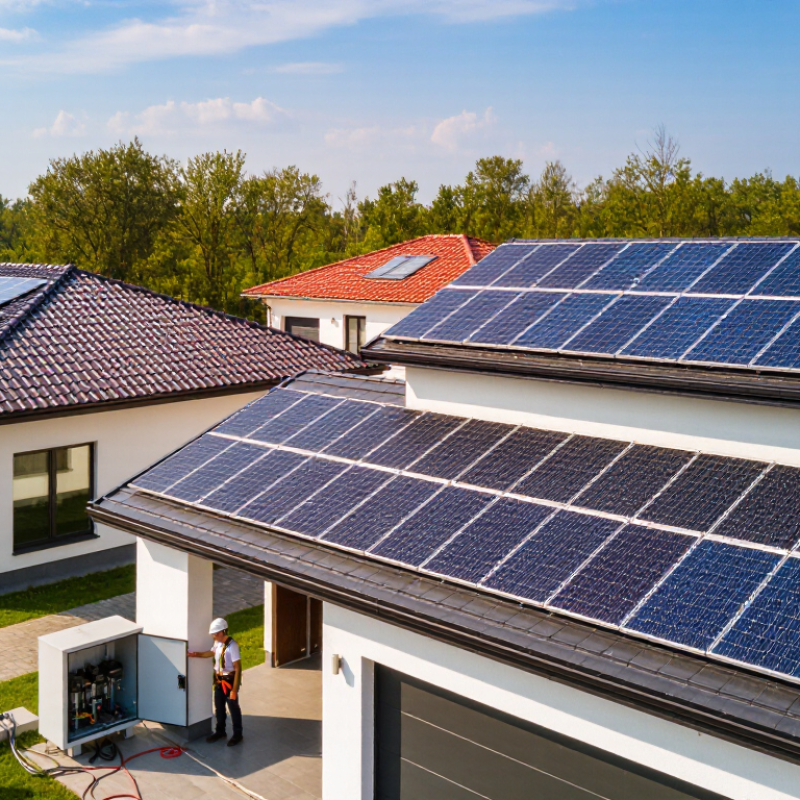
How Solar Panels Work and What Defines a Top Model in 2026
A solar panel turns light into electricity through the photovoltaic effect. Photons striking semiconductor cells release electrons, creating direct current. An inverter converts that current into the alternating current used by household appliances. Output changes with sunlight, temperature, shading, and roof direction, so a panel’s laboratory rating is only part of its real-world value.
The IEA PVPS Snapshot of Global PV Markets 2024 reported about 447 GW of new solar capacity installed worldwide in 2023. That rapid growth makes careful comparison more important, not less. For a 2026 purchase, check module efficiency, temperature performance, product and performance warranties, and independent safety certification. Efficiency helps when roof space is tight. Temperature coefficient matters on hot afternoons. Small details matter. A shaded vent or nearby tree can reduce production even when the panel itself tests well.
Durability deserves equal attention. A review by NREL researchers Jordan and Kurtz, published in Progress in Photovoltaics, found a median panel degradation rate near 0.5% per year across the studies examined. That figure is a useful benchmark, not a promise for every roof. Ask for a site-specific production estimate, and compare its assumptions with your utility bills. Models can look precise. Roof conditions rarely are. I would treat unusually high lifetime-yield estimates cautiously, especially if they gloss over shade, heat, or future maintenance.
Best Solar Panels to Buy Today in 2026 - How Solar Panels Work and What Defines a Top Model in 2026
Solar panels use photovoltaic cells to convert sunlight into direct-current (DC) electricity. A solar inverter converts that electricity into alternating current (AC) for household use or export. The figures below are broad, indicative ranges for commercial panel technologies—not specifications for a particular product.
| Technology or buying factor | How it works or what to check | Indicative performance | Often a good fit for | Important considerations |
|---|---|---|---|---|
| Monocrystalline PERC | Silicon cells use a passivated rear layer to reduce some energy losses and improve light capture. | Typical module efficiency: about 20–22.5%. Temperature coefficient commonly falls around −0.34% to −0.40% per °C. | Projects where established technology and a broad choice of panel formats matter. | Compare current product datasheets: efficiency and temperature response vary by cell and module design. |
| N-type TOPCon | A thin passivating contact helps reduce recombination losses at the silicon surface. | Typical module efficiency: about 21–23.5%. Temperature coefficient is often around −0.29% to −0.35% per °C. | Roof or ground-mounted systems seeking high output per area and widely available modern designs. | Check the warranted degradation rate and whether the panel’s dimensions suit the available roof space. |
| Heterojunction (HJT) | Combines crystalline silicon with thin amorphous-silicon layers to passivate cell surfaces. | Typical module efficiency: about 21–23.5%. Temperature coefficient is often around −0.24% to −0.30% per °C. | Hot locations or installations where temperature-related output and high efficiency are priorities. | Compare installed cost, available formats, and independently documented product warranties. |
| Back-contact silicon | Moves electrical contacts to the rear of the cell, leaving more of the front surface available to capture light. | Some commercial modules reach roughly 22–24% efficiency; results depend on the specific cell design. | Space-constrained roofs where high rated power per panel area is especially useful. | Back-contact is a cell-layout approach, not a single technology; confirm the exact product’s performance data. |
| Panel efficiency | Indicates the share of incident sunlight converted to electricity under standard test conditions. | Standard test conditions use 1,000 W/m² irradiance, a 25°C cell temperature, and an AM1.5 spectrum. | Comparing panels when roof area is limited. | Higher efficiency does not automatically mean better value; compare system cost and expected annual energy yield. |
| Temperature coefficient | Shows how rated power changes as cell temperature rises above 25°C; a value closer to zero is generally preferable. | Expressed as a percentage of power per °C. For example, −0.30%/°C means roughly 3% lower power at 35°C cell temperature than at 25°C, all else equal. | Warm climates or roofs with limited airflow behind the panels. | It describes temperature sensitivity, not the panel’s total energy output across a year. |
| Bifacial capability | A bifacial panel can produce electricity from light reaching both its front and rear surfaces. | Additional rear-side energy is site-dependent; it is not a guaranteed fixed percentage. | Elevated ground mounts or other layouts with reflective surfaces and good rear-side exposure. | Roof-mounted systems close to a dark roof surface may receive little benefit. Mounting height, spacing, and ground reflectivity matter. |
| Warranty and degradation | Review both the product warranty and the separate performance warranty, including the stated output at the end of its term. | Performance-warranty terms commonly span about 25–30 years, but coverage and annual degradation limits vary by product. | Any buyer comparing long-term ownership costs and expected system life. | A warranty is not a prediction of exact energy production. Read exclusions and check who provides the warranty. |
| Practical selection | Compare installed price, rated power, efficiency, temperature coefficient, dimensions, certifications, and warranty terms. | Estimate annual energy using local sunlight, roof orientation, tilt, shading, inverter design, and system losses. | Every project; the most suitable panel depends on site conditions and budget. | Request a site-specific production estimate and verify that electrical ratings match the inverter and system design. |
Note: Performance ranges are approximate market-guide values, not guarantees. Confirm ratings, test conditions, warranty terms, and certifications in the datasheet for the exact panel being considered.
Related Posts
-
10 Best Home Solar Panels to Buy in 2026?
-
Transform Your Living Space: How Home Solar Panels Can Boost Property Value and Lower Bills
-
10 Essential Tips for Choosing Solar Panels in the US
-
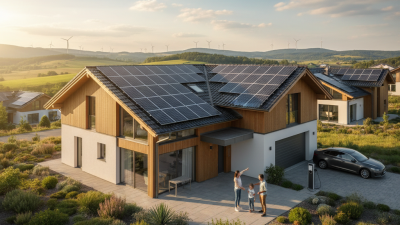
Why Home Solar Systems Are the Best Investment for Your Energy Needs
-
Exploring Home Solar Energy Innovations at the 138th Canton Fair 2025
-
Unlocking Home Solar Potential: How 50% Tax Incentives Are Transforming Energy Savings in 2024