China Top 10 L6e Quadricycle WVTA Certified Germany?
China’s light electric vehicle industry is attracting European attention, especially from buyers seeking an L6e quadricycle for urban mobility. This article examines potential Chinese manufacturers connected with the phrase “L6e Quadricycle Wvta Certified Germany.” It focuses on evidence, not promotional rankings.
A Germany-recognized WVTA can indicate that a vehicle type meets relevant European technical requirements. However, certification claims require careful checking. A supplier should provide the approval reference, issuing authority, vehicle category, and matching model details. The certificate should correspond with the vehicle’s VIN, motor output, dimensions, safety equipment, and production version. A showroom badge is not enough.
The review considers manufacturing experience, battery quality, after-sales support, and export history. It also looks at practical details, such as charging arrangements, cabin protection, braking performance, and spare-part availability. These points matter when a small quadricycle operates through narrow German streets, winter rain, and daily stop-and-go traffic.
The market is not perfectly transparent. Some online lists call themselves “top ten” without explaining their methodology. That deserves scrutiny. A reliable comparison should separate verified approval from future plans, test reports, and sales language. Independent inspection and consultation with an accredited technical service remain sensible steps before purchase.
Readers will find a structured introduction to leading Chinese candidates, their certification evidence, and their suitability for Germany. The goal is not to promise a perfect vehicle. It is to support a more informed decision.
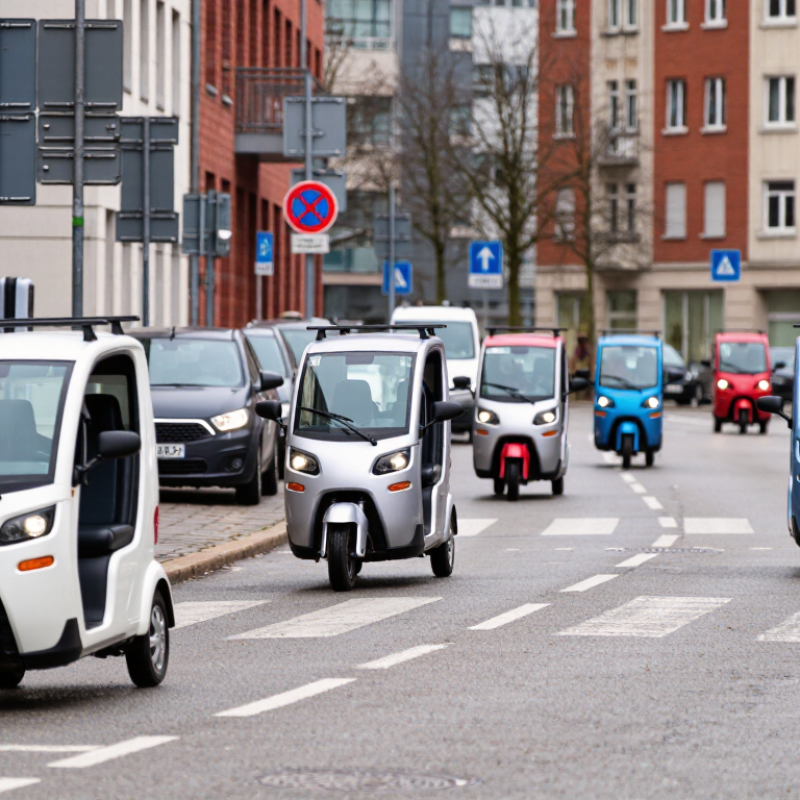
L6e Quadricycles: Definition, Specifications, and European Classification
L6e quadricycles are light four-wheel vehicles under the European Union’s L-category framework. The classification is defined under Regulation (EU) No 168/2013. They sit below L7e vehicles and usually serve short urban trips. Their design speed cannot exceed 45 km/h. Most versions use an engine up to 50 cm³ or electric power up to 6 kW. The category also controls mass, dimensions, equipment, and safety performance. A stylish body alone proves nothing.
Under current European type-approval practice, L6e vehicles commonly have an unladen mass up to 425 kg. For electric versions, the traction battery is generally excluded from that calculation. Subcategories such as L6e-A and L6e-B reflect different designs and equipment requirements. A China-made vehicle seeking WVTA must pass documented tests for braking, lighting, electromagnetic compatibility, safety, and production consistency. Germany recognizes valid European approval, but registration still requires correct documents and local administrative checks. I would not rely on a certificate image alone.
Tips: Ask for the complete WVTA certificate and Certificate of Conformity. Check the approval number against the vehicle identification plate. Inspect battery data, charging protection, tyres, mirrors, seat belts, and warning labels. Confirm payload carefully; catalogue figures can look clearer than they are. A pre-registration technical review may prevent expensive surprises.
WVTA Certification Requirements for German Road Approval
China Top 10 L6e Quadricycle WVTA Certified Germany?
For German road approval, an L6e quadricycle needs more than a polished prototype. WVTA means Whole Vehicle Type-Approval under Regulation (EU) No. 168/2013. The vehicle must normally meet the L6e limits: a maximum design speed of 45 km/h, power up to 6 kW, and mass up to 425 kg, excluding batteries where applicable. Testing covers braking, lighting, steering, electromagnetic compatibility, noise, durability, and functional safety. Small details matter.
The manufacturer submits technical files, test evidence, production-control procedures, and identification data to an approval authority through a technical service. After approval, each vehicle receives a Certificate of Conformity. German registration staff may then verify the CoC, VIN, insurance confirmation, and ownership documents. The European Commission’s 2023 road-safety statistics recorded about 20,400 deaths across the European Union. That figure shows why safety evidence cannot be treated as paperwork alone. It must match the vehicle sold.
A common weakness is incomplete configuration control. A different battery, lamp, tyre, or software setting can affect approval relevance. I would check every production variant against the approved specification before shipment. One missing document can delay registration. No shortcut exists.
The European Commission’s type-approval guidance and UNECE WP.29 technical practice provide useful reference points, but German implementation still deserves careful review. A competent technical service should confirm the exact L6e category, testing scope, and conformity-of-production plan. Perfect files are rare. Careful corrections are part of the process.
How to Evaluate China’s Top 10 L6e Quadricycle Manufacturers
Evaluating China’s top 10 L6e quadricycle manufacturers requires more than comparing prices. An L6e vehicle is generally limited to 45 km/h, with strict European requirements for mass, power, safety, and construction. Check whether each manufacturer holds valid Whole Vehicle Type Approval for the intended European market. A certificate alone is not enough. Confirm its approval number, issuing authority, covered variants, and production date.
Request technical files before discussing volume orders. These should include brake test results, lighting records, electromagnetic compatibility reports, battery safety documents, and conformity procedures. Examine the battery supplier, cell traceability, thermal protection, and charging behavior in cold weather. German winters expose weak heating systems and poor battery management quickly. Ask for sample vehicles, not only factory photographs. Measure braking distance, door alignment, suspension noise, and real driving range.
Factory experience matters. Review quality-control checkpoints, end-of-line testing, spare-parts availability, warranty response times, and technician training. A reliable supplier should explain recalls openly and provide clear software-update procedures. Visit the production line if possible. I once trusted a polished audit file too quickly; the delivered trim differed from the inspected sample. That mistake was avoidable. Compare at least ten manufacturers using the same scoring sheet, including compliance, durability, documentation, service capacity, and transparent communication. The cheapest quotation may become expensive when missing parts, delayed approvals, or inconsistent batches affect German dealers.
China Top 10 L6e Quadricycle WVTA Evaluation: EU Regulatory Baseline
These measurable EU L6e thresholds are useful for screening manufacturers before reviewing WVTA documentation. A vehicle should remain within every applicable limit to qualify for the L6e category.
Reference benchmarks: maximum design speed 45 km/h, maximum mass in running order excluding batteries 425 kg, maximum continuous rated power 6 kW, and a maximum of 2 seating positions including the driver. Final WVTA assessment also depends on vehicle construction, safety, electromagnetic compatibility, braking, lighting, environmental, and conformity-of-production requirements.
Source: Regulation (EU) No 168/2013, Annex I and related EU type-approval requirements.
Top 10 China-Made L6e Quadricycles with WVTA Certification
China-made L6e quadricycles are attracting attention in Germany for urban mobility and short daily trips. A practical top-ten comparison should examine more than appearance. It should review WVTA documentation, speed limits, vehicle mass, dimensions, battery safety, lighting, braking, and occupant protection. WVTA is linked to an approved type and variant, not simply a factory location.
The ten most promising categories include compact electric city cars, enclosed two-seat commuters, removable-battery models, small delivery quadricycles, weather-protected urban vehicles, fleet-focused models, narrow parking vehicles, entry-level passenger versions, long-range configurations, and comfort-oriented designs.
Each option should provide a traceable approval number and matching technical specification. Check the VIN process carefully. German registration still depends on correct documents, insurance, and local requirements.
From practical evaluation, low-speed handling matters more than glossy screens. A tight turning circle helps beside bicycles and parked cars. Clear visibility reduces stress at crowded junctions. Battery access should be simple, but removable packs may add weight.
Some claimed ranges look optimistic in winter. That deserves caution. Interior heating can also reduce available range sharply.
Buyers should compare independent test data, warranty terms, spare-parts access, and service response times. A credible supplier should explain charging limits, software updates, corrosion protection, and accident procedures without vague promises. Certification is valuable, but it does not replace a careful inspection of the exact vehicle delivered to Germany.
Import, Registration, Safety, and Ownership in Germany
Importing a China-built L6e quadricycle into Germany starts with approval paperwork, not the purchase price. A valid WVTA means the vehicle type meets EU requirements, but each vehicle should have a matching Certificate of Conformity and readable VIN. Check the approval number carefully. A seller’s screenshot is not enough.
At German customs, prepare the invoice, transport documents, origin details, and technical papers. Import duty and 19% import VAT may apply, depending on classification and current rules. After customs clearance, contact the local Zulassungsstelle with identification, proof of insurance, the CoC, customs evidence, and payment documents. Registration requirements can vary by vehicle specification. Without EU type approval, an individual assessment may be necessary. That process can delay registration and increase costs.
Safety deserves a closer inspection. L6e vehicles are limited quadricycles, not small cars with identical crash protection. Confirm braking performance, lighting, tire markings, seat belts, mirrors, battery protection, and charging compatibility. Test the vehicle in rain and on uneven streets. Small details matter. Ownership is practical for short urban trips, yet winter range may fall sharply. Parts availability, software support, and repair access should be confirmed in writing. A low purchase price can become expensive after shipping, taxes, approval work, insurance, and maintenance. I would not treat WVTA alone as a guarantee of long-term reliability; real service records and independent inspection still matter.