How to Choose the Best Solar Thermal System for Your Needs?
Choosing the best solar thermal system requires careful consideration of various factors. Solar thermal systems harness sunlight to produce heat for residential or commercial use. The efficiency and effectiveness of these systems can vary significantly.
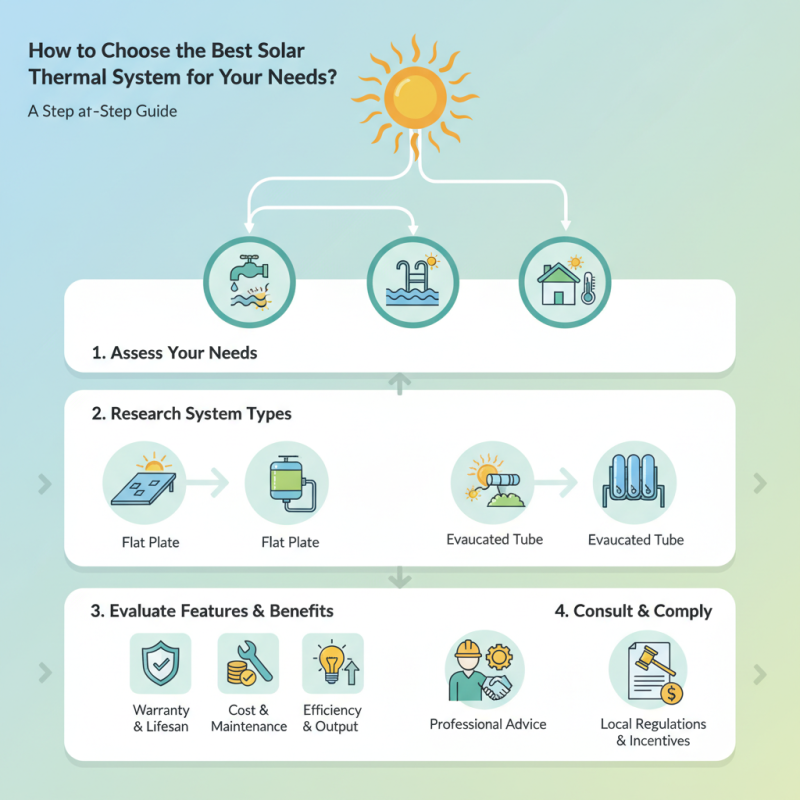
Start by assessing your specific needs. Is your goal to heat water, a pool, or your entire home? Each application requires a different approach. Research the different types of solar thermal systems available. Some systems are better suited for specific climates or uses.
Understanding the features and benefits is crucial. Check warranties, installation costs, and maintenance requirements. It’s essential to gather information from reliable sources. Always consult professionals with solar thermal expertise. They provide insights that mere internet browsing cannot match. Consider local regulations and incentives that may affect your choice. By reflecting on these details, you can make a more informed decision.
Understanding Solar Thermal Systems: An Overview of Options
When considering solar thermal systems, understanding the various options is crucial. Solar thermal systems harness sunlight to produce heat. This heat can be used for water heating, space heating, or even swimming pools. The two main types are flat-plate collectors and evacuated tube collectors. Flat-plate collectors are more affordable, while evacuated tubes offer better efficiency, especially in colder climates.
Many factors influence your choice of a solar thermal system. Consider your geographic location, available sunlight, and specific energy needs. It is essential to evaluate the space available for installation too. Sizing a system is often tricky. An oversized system can lead to unnecessary costs while an undersized one may not meet your needs. Therefore, careful assessment is key.
While solar thermal systems are reliable, they require regular maintenance. Dust can accumulate on collectors, reducing efficiency. Regular checks can prevent performance decline. Many users overlook this aspect. Proper installation is equally important. Poor installation can lead to leaks and costly repairs. Investing time in understanding these factors can lead to better decisions.
Assessing Your Energy Needs for Solar Thermal Solutions
When considering a solar thermal system, the first step is assessing your energy needs. Start by examining your daily hot water usage. Calculate how much hot water your household consumes. This can vary significantly based on the number of people and lifestyle. Understanding these figures helps determine the size of the system you might require.
Next, think about your location. Different climates yield different solar potentials. Areas with more sunlight often need smaller systems to generate the same amount of energy as larger systems in cloudier regions. This geographic consideration is crucial in determining efficiency. Remember, an oversize system can lead to wasted energy and cost.
Also, reflect on your long-term goals. Are you aiming for complete energy independence, or just a reduction in utility bills? Your objectives will influence both system choices and technology options. It’s normal to feel uncertain about these decisions. Engaging with experts or conducting thorough research can bring clarity. Balancing your current needs against future aspirations can lead you to the optimal solar thermal solution.
Key Factors to Consider When Choosing a Solar Thermal System
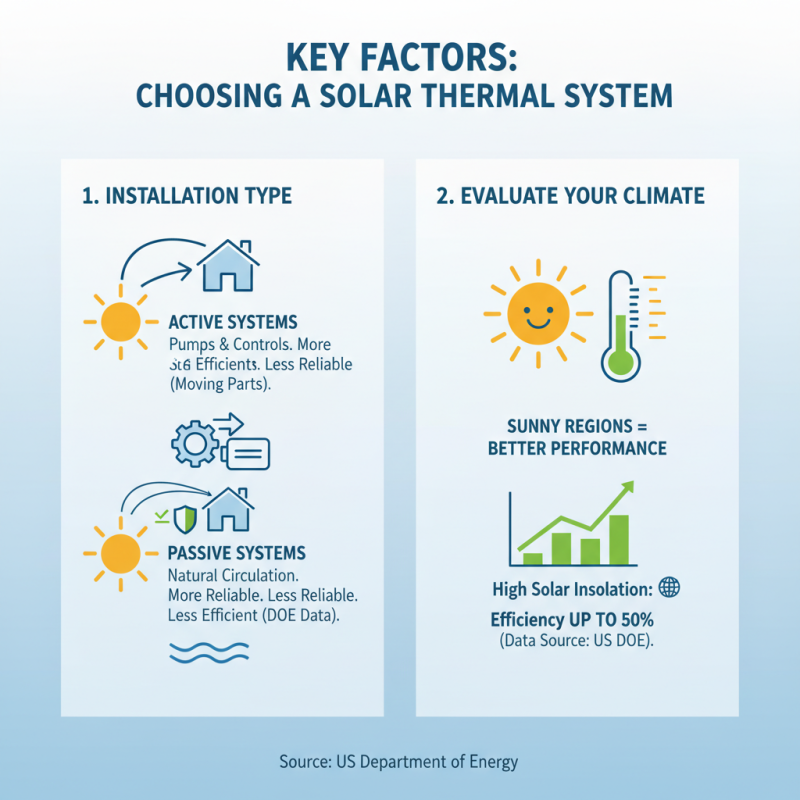
When choosing a solar thermal system, consider several key factors. The installation type matters. There are active and passive systems. Active systems use pumps and controls. Passive systems rely on natural circulation. According to the U.S. Department of Energy, passive systems can be more reliable but often provide less efficiency. Evaluate your climate. In sunny regions, solar thermal systems perform better. Data shows that systems in areas with high solar insolation can increase efficiency by up to 50%.
Another critical aspect is the system size. Size depends on your hot water needs. A family of four requires a system with at least a 30-40 square foot collector area. Oversized systems can lead to inefficiencies. Consider your budget, too. The average solar thermal system installation costs between $5,000 and $10,000. In some cases, financial incentives can reduce this cost. The National Renewable Energy Laboratory reports that federal tax credits can cover up to 26% of installation costs.
Maintenance is often overlooked but vital. Regular checks are essential to ensure system efficiency. Corrosion and buildup can occur over time. Not addressing these issues can reduce output. User reviews highlight mixed experiences on maintenance requirements. Some users report minimal upkeep, while others find it burdensome. Understanding these factors will lead to a more informed decision.
Comparing Different Types of Solar Collectors and Their Efficiency
When selecting a solar thermal system, understanding the different types of solar collectors is crucial.
Flat-plate collectors are popular due to their affordability and ease of installation. They work well in moderate climates for domestic hot water needs. However, their effectiveness can drop in cold weather.
In contrast, evacuated tube collectors excel in efficiency. They are ideal for colder climates since their design minimizes heat loss. This makes them a preferred choice for larger households or commercial systems. Yet, they can be more expensive and vulnerable to breakage. Reflect on your local climate and heating demands.
You might also consider concentrating solar collectors. These systems use mirrors to focus sunlight and can generate heat at higher temperatures.
They work best for industrial applications but aren’t practical for residential use. Assessing your specific needs will help narrow down the choices. Balancing cost, efficiency, and durability is essential when deciding on the right collector for your solar thermal system.
Installation and Maintenance Tips for Optimal Performance
When installing a solar thermal system, careful planning is crucial. Start by assessing your energy needs. Consider your household's hot water consumption. This helps in choosing the right system size. A system that's too small will underperform. An oversized system may cost more and lead to inefficiencies. Optimal sizing is essential for efficient performance.
Maintenance plays a significant role in ensuring long-term efficiency. Regularly check the system's components. Inspect the solar collectors for any debris. Clean them periodically to maintain maximum sunlight absorption. Don't overlook the fluid levels in the storage tanks. Low levels can affect the system's efficacy. Occasionally, you might notice a decrease in performance. This could indicate potential issues requiring professional analysis.
Moreover, be mindful of the seasonal changes. Different seasons may affect output. In winter, snow accumulation can hinder performance. It's essential to plan for winter maintenance. This may include clearing snow or adjusting angles for better sunlight capture. Engaging with local experts can help prevent common pitfalls. They can provide tailored advice based on your unique situation.
How to Choose the Best Solar Thermal System for Your Needs? - Installation and Maintenance Tips for Optimal Performance
| System Type |
Efficiency (%) |
Installation Cost ($) |
Maintenance Frequency (Years) |
Lifespan (Years) |
| Flat-Plate Collector |
70-85 |
4000 |
5 |
20 |
| Evacuated Tube Collector |
80-90 |
6000 |
3 |
25 |
| Integral Collector Storage |
60-75 |
3000 |
4 |
15 |
| Heat Pump Water Heater |
200-400% (COP) |
8000 |
2 |
10 |