
How to Choose Home Solar Power Systems in 2026?
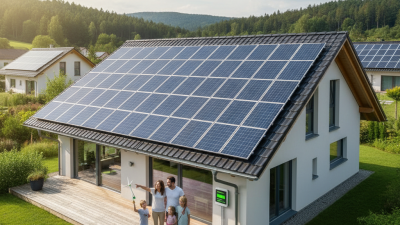
Choosing a home solar power system in 2026 requires more than comparing panel prices. Your roof, electricity use, local climate, and utility rules shape the real outcome. A south-facing roof may produce excellent output, while nearby trees can quietly reduce production every afternoon. Shading matters.
The International Energy Agency expects solar photovoltaic technology to deliver most global renewable-capacity growth through 2030 (IEA, Renewables 2024). The IEA Photovoltaic Power Systems Programme also reported continued record deployment worldwide in Trends in Photovoltaic Applications 2024. These figures show strong industry momentum, but they do not guarantee savings for every household. A system must match your actual load profile. A larger array is not automatically better.
Reliable selection begins with measurable details. Review twelve months of electricity bills, then estimate daytime and evening consumption separately. NREL’s U.S. Solar Photovoltaic System and Energy Storage Cost Benchmarks explains how equipment, labor, permitting, and financing influence installed costs. Battery storage adds resilience, but its value depends on outage frequency, tariffs, and battery replacement assumptions. Ask for production estimates using your roof’s direction and shading conditions.
Do not trust perfect forecasts.
Independent warranties, installer experience, workmanship coverage, and clear monitoring access deserve equal attention. EnergySage’s Solar and Storage Marketplace Report 2024 also highlights meaningful variation among quoted system prices and storage options. Local quotes remain essential. Reports provide context, not certainty. Even experienced installers can miss future tariff changes, roof repairs, or unusual winter weather. The strongest decision combines published evidence, site-specific inspection, conservative financial assumptions, and a willingness to question attractive numbers.
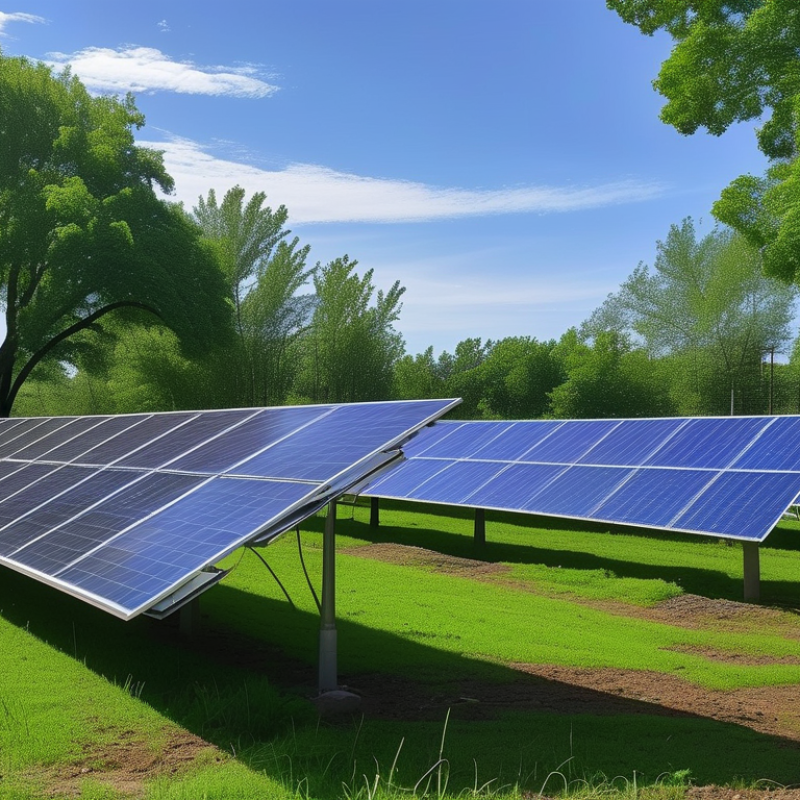
Home Solar Power System Basics and Key Components
How to Choose Home Solar Power Systems in 2026?
Home solar begins with a simple chain: panels capture sunlight, an inverter converts direct current into usable household electricity, and wiring delivers it safely. Racking keeps panels stable during wind, rain, and seasonal movement. A smart meter tracks imports and exports. A battery stores surplus energy for evening use or outages. It is useful, but not automatically economical.
The International Energy Agency Photovoltaic Power Systems Programme reported more than 1.6 terawatts of global photovoltaic capacity by the end of 2023. That scale shows strong technical maturity, not identical results for every roof. Shade from one chimney can reduce output across a string. Roof direction, local weather, annual electricity use, and utility rules matter more than panel count alone. Ask an installer for hourly production estimates, equipment datasheets, warranty terms, and a clear battery-cycle assumption.
NREL’s PVWatts model applies a default total system-loss assumption of about 14%, including wiring, mismatch, and inverter effects. Real homes can perform better or worse. A clean spreadsheet may still be wrong. Check the proposed design against twelve months of bills, not one sunny day. I would also inspect the inverter’s temperature range, battery usable capacity, emergency-load limits, monitoring access, and maintenance plan. Those small details often decide whether the system feels dependable after installation.
| System Dimension | Component or Concept | Typical Residential Data | What It Does | Key Selection Criteria | Practical Considerations |
|---|---|---|---|---|---|
| System Planning | Household electricity demand | Approximately 20–30 kWh per day for a typical electrified home; actual use varies significantly. | Defines the amount of solar generation and storage required. | Review at least 12 months of electricity bills, seasonal usage, heating and cooling loads, and planned electric appliances. | Use annual and monthly consumption rather than a single utility bill to avoid undersizing or oversizing the system. |
| System Planning | Solar array size | Many homes use systems in the approximate range of 4–12 kW DC, depending on roof area and electricity demand. | Converts sunlight into direct-current electricity. | Match the array to energy consumption, available roof space, local solar resource, and utility interconnection limits. | A larger array can improve winter production but may require more roof area, inverter capacity, or electrical upgrades. |
| Solar Generation | Solar photovoltaic modules | Common residential modules are generally rated around 350–500 W each, with module efficiencies often above 20%. | Produces DC electricity from sunlight through photovoltaic cells. | Compare rated power, efficiency, temperature coefficient, product warranty, degradation rate, and mechanical load rating. | Higher efficiency is most useful when roof space is limited; it does not automatically guarantee a lower total project cost. |
| Solar Generation | Module arrangement | Series-connected strings commonly operate at several hundred volts DC, subject to system design limits. | Combines individual modules to deliver the voltage and current required by the inverter. | Consider roof orientations, tilt, shading, string voltage range, cold-weather voltage, and maximum current. | All electrical design should follow local codes and be completed by a qualified installer. |
| Power Conversion | Inverter type | Residential systems commonly use string inverters, module-level power electronics, or hybrid inverters. | Converts solar DC electricity into AC electricity used by household loads and the utility grid. | Evaluate continuous output power, surge capability, efficiency, operating voltage range, monitoring, and battery compatibility. | Hybrid inverters are designed to coordinate solar generation, batteries, household loads, and grid power. |
| Power Conversion | Inverter capacity ratio | A DC-to-AC ratio of roughly 1.1–1.4 is commonly considered in residential design, depending on site conditions. | Allows the solar array and inverter to be sized for different production patterns. | Assess local sunlight, roof orientation, clipping tolerance, utility rules, and inverter limits. | A higher ratio may increase annual energy production but can cause more midday power clipping. |
| Energy Storage | Battery energy capacity | Residential batteries often provide approximately 5–20 kWh of usable capacity per unit or system segment. | Stores surplus solar energy for evening use, backup power, or load shifting. | Compare usable capacity, round-trip efficiency, depth of discharge, cycle life, warranty duration, and operating temperature. | Usable capacity is more meaningful than nameplate capacity because reserve limits reduce the energy available to loads. |
| Energy Storage | Battery power rating | Typical home battery systems deliver approximately 3–10 kW of continuous power, with higher short-term surge capability. | Determines how many appliances can operate simultaneously during normal or backup operation. | Match continuous and surge ratings to refrigerators, pumps, heating equipment, air conditioners, and other essential loads. | A battery with high energy capacity may still be unable to start or run large motors if its power rating is too low. |
| Energy Storage | Battery chemistry | Lithium iron phosphate is widely used in stationary storage because of its cycle life and thermal stability characteristics. | Stores electrical energy through reversible electrochemical reactions. | Review safety certifications, thermal management, usable capacity, warranty conditions, and installation location requirements. | Battery safety depends on the complete system design, certified equipment, correct installation, and required clearances. |
| Electrical Protection | Disconnects and overcurrent protection | Systems require appropriately rated AC and DC disconnects, fuses, breakers, and surge protection where required. | Provides isolation, fault protection, and safe maintenance access. | Verify voltage, current, interrupt rating, environmental rating, accessibility, and compliance with local electrical codes. | Protection equipment must be coordinated with the array, inverter, battery, service panel, and wiring methods. |
| Electrical Wiring | Conductors and cable management | PV wiring commonly uses sunlight-resistant conductors rated for outdoor and wet locations; conductor size depends on current and distance. | Transfers electricity between modules, inverters, batteries, the service panel, and the grid. | Consider ampacity, voltage drop, insulation rating, temperature correction, conduit routing, and connector compatibility. | Loose, incompatible, or poorly managed connectors can increase resistance and create safety risks. |
| Mounting | Roof or ground mounting structure | Roof systems commonly use aluminum rails, clamps, attachments, and flashing; ground systems require posts or foundations. | Secures modules and transfers wind, snow, and mechanical loads to the building or ground. | Check roof condition, structural capacity, waterproofing, wind zone, snow load, corrosion resistance, and access pathways. | A roof replacement may be more economical before installation if the existing roof has limited remaining service life. |
| Performance | Solar resource and shading | Unshaded, south-facing surfaces in the Northern Hemisphere generally offer strong production; east- and west-facing roofs can also be effective. | Determines how much sunlight reaches the modules throughout the day and year. | Assess azimuth, tilt, nearby trees, buildings, chimneys, horizon shading, and seasonal sun movement. | Partial shading can reduce string output; module-level electronics may help manage mismatch but cannot create missing sunlight. |
| Performance | System losses | Total losses from temperature, wiring, mismatch, inverter conversion, soiling, and availability commonly reduce energy yield by several percent. | Represents the difference between theoretical solar production and usable AC electricity. | Request an energy model that includes shading, roof orientation, temperature, snow or soiling, and equipment efficiency. | Annual production estimates are forecasts, not guarantees; actual output changes with weather and operating conditions. |
| Grid Interaction | Grid-tied operation | Excess solar electricity can be exported to the grid when permitted; grid-connected inverters normally shut down during outages without approved backup capability. | Balances household generation and demand through the utility network. | Check export rules, interconnection procedures, compensation rates, service-panel capacity, and outage behavior. | A standard grid-tied system generally does not provide backup power during a grid outage for safety reasons. |
| Backup Power | Backup load panel | Backup systems may support selected essential circuits or a whole-home load panel, depending on inverter and battery power ratings. | Separates protected loads from circuits that are not supplied during an outage. | Identify essential loads, starting currents, load diversity, transfer equipment, and backup duration. | Whole-home backup may require load management, additional batteries, a larger inverter, or service upgrades. |
| Monitoring | Energy monitoring system | Monitoring may provide solar production, household consumption, battery state of charge, grid import, and grid export data. | Tracks system performance and helps identify faults or unusual energy use. | Look for interval data, alerts, local access, data retention, privacy controls, and compatibility with the selected equipment. | Compare measured production with the design estimate after allowing for weather and seasonal variation. |
| Reliability | Equipment operating environment | Outdoor equipment must be rated for the expected temperature, humidity, rain, dust, and sunlight exposure. | Protects electrical and electronic components from environmental conditions. | Review enclosure rating, temperature range, ventilation, corrosion resistance, flood risk, and clearance requirements. | Battery and inverter placement should follow manufacturer instructions and local fire-safety requirements. |
| Maintenance | Routine maintenance | Most systems require periodic visual inspection; cleaning is site-dependent and may be needed where dust, pollen, or bird debris accumulates. | Preserves safe operation and helps maintain expected production. | Plan for inspection of wiring, mounting hardware, roof penetrations, vegetation, fault messages, and battery ventilation. | Do not walk on modules or perform live electrical work without appropriate training and safety procedures. |
| Financial Evaluation | Total installed cost | Cost depends on array size, battery capacity, roof complexity, electrical upgrades, permitting, labor, and local incentives. | Measures the complete investment rather than only the price of modules. | Request an itemized proposal covering equipment, design, permits, interconnection, labor, warranty terms, and future service. | Compare proposals using estimated annual production, usable storage, backup capability, and total ownership cost. |
| Compliance | Permits and standards | Residential systems commonly require building, electrical, fire-safety, and utility approvals, depending on jurisdiction. | Ensures the system meets safety, structural, and grid-interconnection requirements. | Confirm required permits, inspection stages, equipment certifications, rapid-shutdown rules, and utility approval procedures. | Requirements vary by location, so local authorities and qualified professionals should be consulted before purchase. |
| Selection Strategy | System type | Common choices include grid-tied solar, solar plus battery storage, and systems designed for limited or whole-home backup. | Aligns system behavior with energy goals and outage requirements. | Define whether the priority is bill reduction, backup resilience, energy independence, export revenue, or future electrification. | The best design is based on load profile, roof conditions, local rules, budget, and expected time at the property. |
Related Posts
-
How to Choose Home Solar Energy Systems in 2026?
-
Top Benefits of Home Solar Systems You Should Know?
-
What is Solar Hot Water and How Does It Work?
-

What is a Solar Absorber and How Does It Enhance Energy Efficiency
-

Why Choosing Pool Solar Solutions Can Transform Your Outdoor Experience?
-
10 Best Home Solar Panels for Affordable Renewable Energy Solutions