Why is Forklift Collision Detection System Essential for Safety?
The workplace can be a dangerous environment, particularly when forklifts are in operation. A Forklift Collision Detection System is essential for enhancing safety measures. Forklifts are heavy and powerful machines, posing serious risks if not managed properly. In busy warehouses, accidents can happen in an instant.
Visualize a forklift moving quickly, navigating tight spaces, and transporting heavy loads. A moment of distraction could lead to a collision. The repercussions of such incidents extend beyond physical injuries; they can disrupt operations and negatively impact morale. Investing in a reliable Forklift Collision Detection System could prevent these scenarios.
Despite technological advances, not every workplace has adopted these essential systems. Some companies may overlook the benefits due to costs or uncertainty. However, the cost of inaction can be far greater. Implementing a Forklift Collision Detection System is not just about compliance; it’s about creating a culture of safety. The presence of such systems can be a constant reminder to workers that safety is paramount.
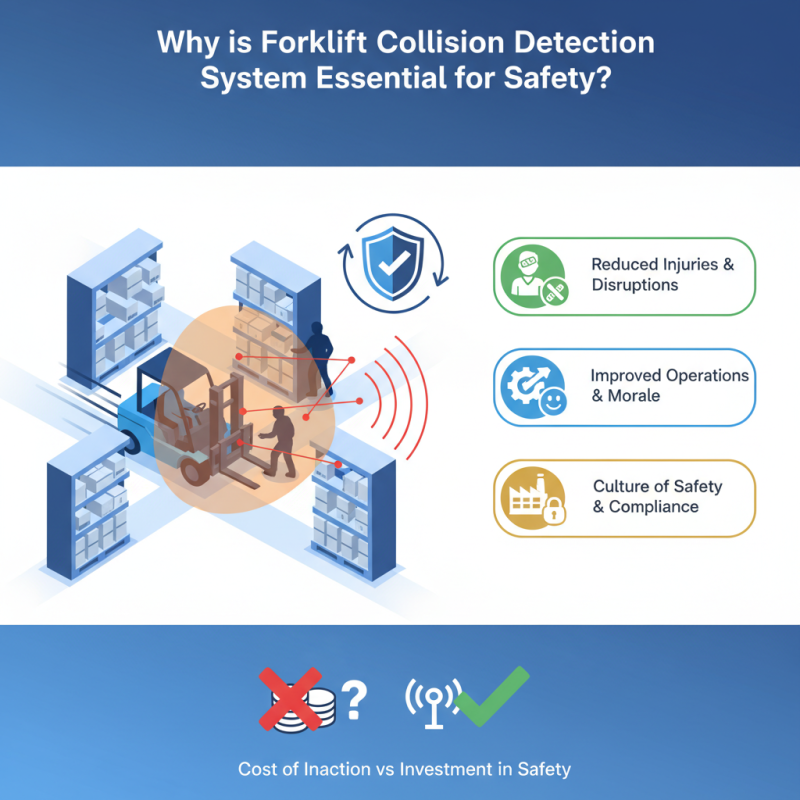
Importance of Forklift Collision Detection Systems in Workplace Safety
In busy workplaces, forklifts play a crucial role in material handling. However, their use comes with significant risks. Forklift collision detection systems are essential for enhancing safety in these environments. These systems are designed to detect obstacles and prevent accidents. They utilize sensors to monitor the surroundings continuously, offering alerts and even stopping the forklift when necessary.
Many incidents occur due to blind spots or lack of awareness. Workers can be distracted. Forklifts are often operated in close quarters. This raises the stakes significantly. Collision detection technology provides an added layer of protection. It assists operators in making safer decisions. Yet, not all workplaces implement these systems effectively. Some still rely on manual observations, which can be misleading or overlooked.
Investing in these systems can greatly reduce the risk of accidents. The initial costs may seem high, but the potential savings in injury prevention are immense. Not every facility recognizes the value of these systems. This can lead to complacency and risky behaviors. A culture of safety should encourage regular training and awareness. After all, technology alone cannot ensure safety without proper usage and understanding.
Key Components of Forklift Collision Detection Technology
Forklift collision detection technology plays a pivotal role in ensuring workplace safety. This system includes several key components that work together harmoniously. Sensors are the backbone; they detect obstacles in the vicinity of the forklift. Ultrasonic and infrared sensors are common choices. These sensors send out signals and receive feedback, allowing them to spot potential hazards.
Another vital component is the alarm system. When sensors detect an impending collision, they trigger an alert. This can be a loud beeping sound or flashing lights. Such immediate alerts can prevent accidents before they happen. Visual display units can also show hazard locations clearly to operators.
However, not all systems are perfect. Sometimes, sensors can misinterpret objects, leading to false alarms. This can be frustrating and may cause operators to disregard warnings.
Moreover, integration with the forklift's braking system is crucial. If an obstacle is detected, the system should automatically apply the brakes. Yet, the effectiveness of this feature varies among systems.
Regular maintenance of these technologies is essential to ensure they function correctly. A lack of upkeep can lead to malfunctions, compromising safety efforts. Understanding these aspects of forklift collision detection is vital for protecting workers and minimizing accidents.
Impact of Forklift Accidents on Workplace Efficiency and Costs
Forklift accidents can significantly impact workplace efficiency and costs. An incident may lead to injuries, property damage, and downtime. Replacing damaged materials or equipment often incurs unexpected expenses. Moreover, injured workers may require time off, affecting workflow and productivity. This cascading effect can disrupt operations long after the accident.
Implementing a collision detection system can help reduce these risks. It enhances awareness around forklift movements. Workers become more vigilant when they recognize potential hazards. Regular training on safety practices is also essential. Encourage employees to report near misses. These reports can help identify patterns and improve safety protocols.
Tips for improving safety include establishing clear pathways for pedestrians and forklifts. Paint lines on the floor to guide both workers and drivers. Conduct routine safety checks on equipment to ensure they function well. Remember, safety is everyone's responsibility. Promote an engaged culture where every team member feels accountable for preventing accidents.
Why is Forklift Collision Detection System Essential for Safety? - Impact of Forklift Accidents on Workplace Efficiency and Costs
| Data Dimension | Data Value |
| Annual Forklift Accidents | 8500 incidents |
| Average Cost per Accident | $35,000 |
| Lost Work Days | 200,000 days |
| Impact on Productivity | 15% decrease |
| Implementation Cost of Collision Detection Systems | $10,000 per unit |
| Reduction in Accidents after Implementation | 40% |
| Return on Investment (ROI) | 200% within 2 years |
Regulatory Standards and Compliance for Collision Detection Systems
The importance of regulatory standards for forklift collision detection systems cannot be overstated. According to a 2021 report from the Occupational Safety and Health Administration (OSHA), nearly 70% of forklift accidents are caused by collisions. This alarming statistic highlights the need for compliance with established safety regulations. Systems designed to detect potential collisions can significantly reduce the likelihood of accidents and injuries.
Regulatory bodies emphasize that collision detection systems must meet specific guidelines. The American National Standards Institute (ANSI) sets forth standards that require these systems to be reliable and effective. Companies must adhere to these standards to ensure employee safety and regulatory compliance. Non-compliance can result in hefty fines and increased liability risks.
However, many businesses struggle to implement these solutions effectively. According to a recent industry study, only 30% of warehouses have systems in place that comply with ANSI standards. This indicates a clear gap in safety practices. As organizations invest in these technologies, they should also focus on regular training and audits. Continuous evaluation can help identify areas for improvement and ensure that safety remains a priority.
Future Trends in Forklift Safety Technology and Collision Prevention Solutions
As industries grow, so do the risks associated with forklift operations. The advancement of safety technology has become crucial. One trend is the integration of collision detection systems in forklifts. These systems use sensors to detect obstacles. By alerting operators in real time, they significantly reduce the chance of accidents.
Another important trend is the use of autonomous systems. These systems can navigate and perform tasks with minimal human intervention. While exciting, they raise concerns. Employees may become overly reliant on technology. If operators lose their situational awareness, that could lead to unsafe environments.
Wearable technology is also emerging. Devices can track an operator’s health and alert them in case of fatigue. However, implementing such tech can be challenging. Not all workers embrace new tools. Resistance to change can slow the adoption of safety solutions. As safety technologies evolve, ongoing education and awareness will remain vital for true collision prevention.
Forklift Collision Detection System Usage and Benefits