What is Solar Hot Water and How Does It Work?
Solar hot water systems are innovative and eco-friendly. They harness sunlight to heat water for various uses. This technology is gaining attention worldwide for its benefits.
Understanding how solar hot water works can be fascinating. The system typically includes solar collectors, storage tanks, and pumps. Sunlight hits the panels, warming the water inside. This heated water can then be used for domestic needs like bathing and cleaning.
While there are advantages, challenges exist. Initial costs can be high, which may deter potential users. Maintenance and efficiency can vary based on climate and system design. Overall, exploring solar hot water is essential for those considering sustainable energy solutions.
What is Solar Hot Water and Its Importance in Sustainable Energy?
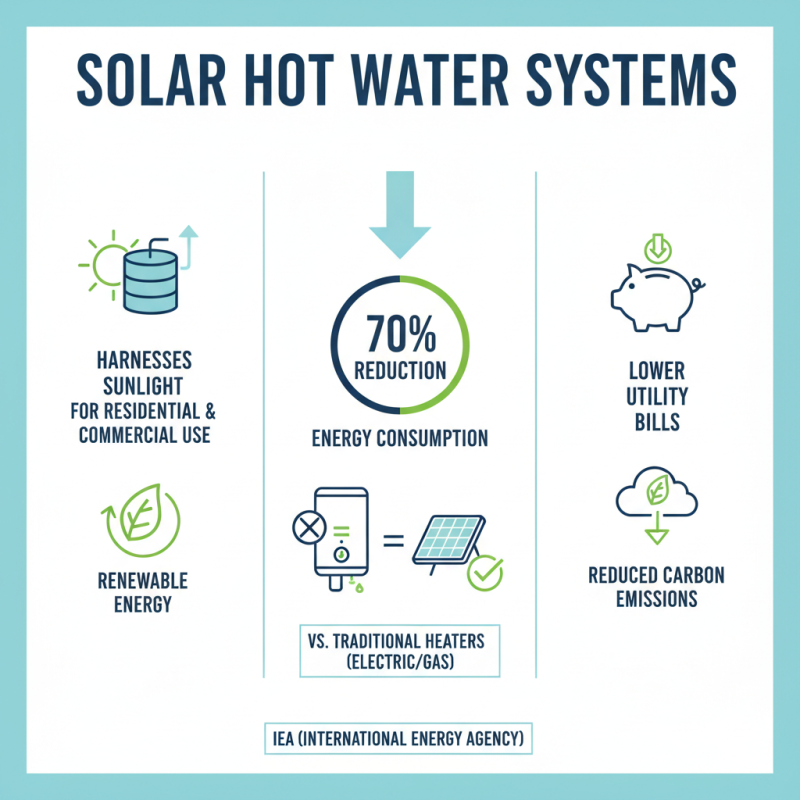
Solar hot water systems harness sunlight to heat water for residential and commercial use. This renewable energy solution plays a crucial role in sustainable energy practices. According to the International Energy Agency, solar water heaters can reduce energy consumption by up to 70% compared to traditional electric or gas water heaters. This dramatic decrease in energy use leads to lower utility bills and reduced carbon emissions.
The technology is relatively simple. Solar collectors absorb sunlight and convert it into heat, which is transferred to the water stored in insulated tanks. While installation costs can be high, many systems offer long-term savings. However, the effectiveness can vary by location and climate. Certain regions may not receive enough sunlight year-round, leading to inconsistent hot water supply.
Although solar hot water systems have significant benefits, challenges remain. Maintenance can be complex, requiring regular checks for leaks and performance. Additionally, public awareness and understanding of solar hot water systems are still inadequate. In a survey by the U.S. Department of Energy, only 25% of homeowners knew about solar water heating as an option. This indicates a gap in education and outreach that must be addressed for wider adoption.
The Mechanism of Solar Hot Water Systems: How They Generate Heat
Solar hot water systems harness sunlight to produce heat. They are designed to provide hot water for various uses. The system typically consists of solar collectors, storage tanks, and distribution units. The collectors gather sunlight and convert it into heat. This heat is then transferred to water circulating through the system.
The solar collectors are usually mounted on rooftops. They need direct sunlight to function efficiently. During sunny days, these collectors can reach high temperatures. Water flows through pipes in the collectors, picking up heat energy. Once heated, the water travels to insulated storage tanks. There, it remains until needed for showers, cleaning, or other purposes.
While solar hot water systems are effective, they are not without challenges. Weather changes can impact performance. On a cloudy day, heat generation decreases significantly. Additionally, installation costs can be a barrier for some. Maintenance is crucial to avoid issues like leaks or inefficiencies. Understanding these factors can lead to better decisions about solar energy use.
Types of Solar Hot Water Systems: Active vs. Passive Technologies
Solar hot water systems harness the sun's energy to heat water. They come in
two main types: active and passive.
Active systems use pumps and controls to circulate water. They tend to be
more efficient but are often more complex to install. According to the U.S. Department of Energy,
active systems can provide up to 80% of a household's hot water needs.
Passive solar hot water systems are simpler. They don’t require pumps or controls, using natural convection instead.
These systems rely on the natural flow of water, which means they can be more reliable. However, they may not
perform as well in cooler climates. A report from the International Renewable Energy Agency shows
that passive systems generally have lower installation costs but often deliver less hot water.
Both systems have their pros and cons.
Active systems can be more efficient but come with higher maintenance needs and failure risks. On the other hand,
passive systems offer simplicity but may fall short in performance. Homeowners must weigh these factors carefully.
Selecting the right system isn't just a technical choice;
it requires personal consideration and reflection on household needs.
Key Components of Solar Hot Water Systems and Their Functionality
Solar hot water systems capture sunlight to heat water. They consist of several key components that work together. The solar collector absorbs sunlight. This collector can be flat-plate or evacuated tube. Flat-plate collectors look like solar panels. They are often used in residential settings. Evacuated tube collectors are more efficient in colder climates.
Another essential part is the storage tank. This tank holds the heated water. It’s usually well-insulated to reduce heat loss. Sometimes, the water needs to be heated more when the sun isn’t shining. This is where backup heaters come in. They ensure hot water availability even during cloudy days.
Piping is crucial for transporting water. Insulated pipes minimize heat loss as water moves to faucets or appliances. System monitoring is often overlooked. Regular checks are necessary to ensure optimal performance. A malfunctioning component can lead to heating inefficiencies. Understanding these components helps users appreciate their solar hot water system better. Each part plays its role, but neglect can lead to problems.
What is Solar Hot Water and How Does It Work?
| Component |
Function |
Material |
Efficiency Rating |
| Solar Collector |
Absorbs sunlight and converts it into heat. |
Glass and copper |
70% - 90% |
| Hot Water Storage Tank |
Stores hot water for later use. |
Insulated steel |
N/A |
| Pumps |
Circulate water between the collector and the tank. |
Plastic and metal |
N/A |
| Heat Exchanger |
Transfers heat from the collector fluid to the water in the tank. |
Copper or stainless steel |
85% - 95% |
| Controller |
Regulates system operation based on temperature readings. |
Electronic components |
N/A |
Efficiency and Cost-Effectiveness of Solar Hot Water in Different Climates
Solar hot water systems utilize sunlight to heat water for residential and commercial use. Their efficiency can vary greatly depending on the climate where they are installed. In sunny regions, these systems can capture and convert solar energy effectively. However, in areas with frequent cloud cover or extended winter seasons, performance may drop significantly. This variability must be considered when planning solar hot water installations.
Cost-effectiveness is another crucial factor. In warmer climates, the return on investment can be rapid, as the systems can operate optimally year-round. Conversely, in colder climates, the initial installation costs may take longer to recoup. Homeowners need to evaluate their local climate and potential savings. They may benefit from incentives, but these vary by location. Unexpected maintenance costs may arise too, especially if systems are not designed for specific weather conditions.
It's essential to be realistic about expectations. Solar hot water is not a one-size-fits-all solution. Reflecting on personal experiences and local conditions will guide better decisions. Each installation can offer different results. Understanding these nuances is vital for anyone considering solar hot water.
Solar Hot Water Efficiency and Cost-Effectiveness in Different Climates
This chart illustrates the estimated efficiency and cost-effectiveness of solar hot water systems across various climates. The data reflects the Performance Ratio (PR) and Levelized Cost of Energy (LCOE) in different temperature zones.