
1-906-774-0098

What Is a Tech Rosewood Acoustic Slat Panel?

A Tech Rosewood Acoustic Slat Panel is a decorative wall or ceiling system designed to reduce reflected sound. It usually combines narrow wood-finish slats with an acoustic felt backing. The rosewood appearance adds warmth, while the gaps between slats help manage echoes. In a meeting room, this can soften sharp voices and reduce the hollow sound created by hard surfaces. It does not completely block noise between rooms. That distinction matters.

From an installation perspective, performance depends on the panel’s construction, spacing, backing material, and total coverage. A qualified supplier should provide technical data, including acoustic test results, fire classification, dimensions, and maintenance guidance. Installation may involve adhesive, screws, battens, or a suspended ceiling framework. The substrate must remain clean, dry, and reasonably level. Small mistakes can affect both appearance and sound absorption.

Real rooms are rarely perfect.

A designer should consider ceiling height, furniture, windows, floor finishes, and existing noise sources before selecting panels. A Tech Rosewood Acoustic Slat Panel may work well in offices, studios, restaurants, reception areas, and home interiors. However, one product cannot solve every acoustic problem. Some spaces need thicker absorption, bass control, or additional ceiling treatment. Product names can also sound more technical than the materials actually used. Checking independent test reports is therefore wise. This guide explains the panel’s structure, acoustic role, visual benefits, installation factors, and practical limitations. It also examines where this solution performs well, and where another treatment may be more suitable.
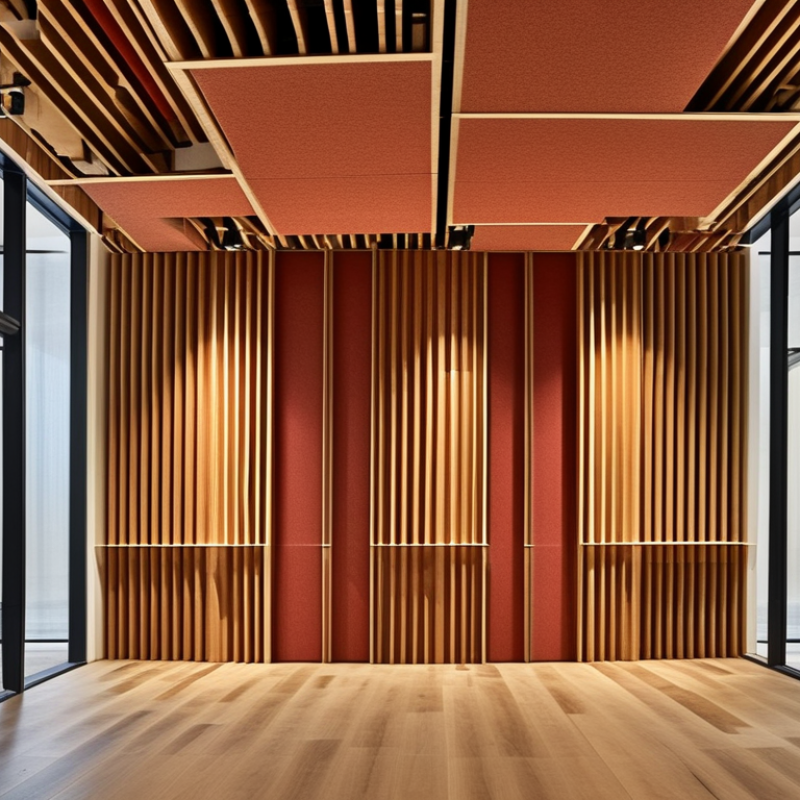
What Is a Tech Rosewood Acoustic Slat Panel?

Definition and Core Components of a Tech Rosewood Acoustic Slat Panel

What Is a Tech Rosewood Acoustic Slat Panel?

Definition and Core Components of a Tech Rosewood Acoustic Slat Panel

A Tech Rosewood acoustic slat panel is a decorative wall or ceiling system designed to reduce reflected sound. It usually combines narrow wood-look slats with an acoustic backing layer. “Rosewood” often describes the visible color, grain, or veneer style. It does not always mean solid rosewood timber.

The core components are practical. The front slats may use veneered MDF, engineered wood, or a durable laminate surface. Behind them, a dark felt layer absorbs part of the sound passing between the slats. This layer also creates the panel’s strong visual contrast. A stable backing structure keeps the slats evenly spaced and supports installation. Some panels include recycled fibers, but the exact material should be checked in technical documents.

The open gaps help sound reach the backing instead of bouncing directly into the room. However, performance depends on spacing, panel thickness, wall distance, and room furnishings. A product with laboratory test data is more trustworthy than one using vague acoustic claims. The panel is not a complete studio cure. That distinction matters.

In my experience, careful placement improves results. Panels behind desks, seating areas, or opposite hard walls can reduce harsh reflections. Corners may need additional treatment. The term “Tech Rosewood” is not perfectly standardized, so buyers should confirm fire rating, formaldehyde emissions, cleaning requirements, and installation limits. Small details matter. A visually warm panel can still perform poorly when installed over an unsuitable surface.

Materials, Layered Construction, and Rosewood-Style Surface Finish

A tech rosewood acoustic slat panel is a layered wall treatment designed to manage sound while adding a warm, timber-like appearance. Despite its name, “tech rosewood” usually describes the visual finish, not solid rosewood. The surface may use printed film, engineered veneer, or decorative laminate. This difference affects durability, cost, and color consistency. Reliable specifications should identify the substrate, finish, backing, and acoustic test conditions.

Construction usually starts with PET felt or another sound-absorbing backing. Narrow MDF or plywood slats are fixed above it, creating regular channels. These gaps help sound energy reach the softer layer behind the slats. The backing reduces reflections, while the slats provide structure and visual rhythm. A denser substrate can improve stability, but it also increases weight. Installation requires a level wall, accurate spacing, and suitable fixings. Uneven channels become obvious under side lighting. Small errors show.

A rosewood-style finish should offer natural variation rather than repeating the same grain pattern. Sealed edges and a wipe-resistant surface are useful in busy interiors. Darker tones can reveal dust, scratches, and cut edges more readily. Easy to miss. Requesting a physical sample is sensible because screens often distort brown and red tones. Check indoor-air declarations, fire classification, and measured absorption values for the complete assembly. The label alone proves little. Claims need checking. A beautiful surface cannot compensate for poor acoustic placement or careless installation.

What Is a Tech Rosewood Acoustic Slat Panel? - Materials, Layered Construction, and Rosewood-Style Surface Finish

Data Dimension Typical Specification Material or Performance Description
Product type Decorative acoustic slat panel A wall or ceiling panel combining narrow decorative slats with an acoustically absorptive backing layer.
Visible slats MDF, plywood, or solid wood veneer-faced strips The slats create the linear architectural appearance and provide a durable substrate for the rosewood-style surface finish.
Rosewood-style finish Printed wood grain, engineered veneer, or decorative laminate Designed to reproduce the reddish-brown color, darker grain lines, and tonal variation associated with rosewood without requiring solid rosewood construction.
Core board Medium-density fiberboard or comparable engineered wood Provides dimensional stability, consistent machining, and a smooth surface for coating or veneer application.
Acoustic backing Polyester fiber, mineral wool, or recycled fiber board The porous backing absorbs a portion of incident sound energy and reduces reflections from hard wall surfaces.
Common overall thickness Approximately 20–25 mm The final thickness depends on the slat depth, backing board thickness, and whether an additional mounting layer is included.
Slat width Approximately 25–40 mm Narrower slats create a finer rhythm, while wider slats produce a stronger and more prominent linear pattern.
Open-joint spacing Approximately 10–15 mm The gaps expose portions of the acoustic backing and allow sound to reach the absorptive layer.
Standard panel size Commonly about 2400 × 600 mm Other dimensions can be manufactured, but the actual panel size should be confirmed before layout planning and installation.
Acoustic performance Often approximately NRC 0.45–0.85 Performance varies significantly with backing material, cavity depth, mounting method, room conditions, and test standard. A laboratory report is required for a verified rating.
Sound absorption principle Porous absorption behind spaced slats Sound enters the joints, travels through the air gaps, and is dissipated as it passes through the fibrous or porous backing.
Surface protection Clear lacquer, water-based coating, UV coating, or laminate overlay The protective layer helps resist abrasion, staining, and color change. It does not make the panel suitable for prolonged outdoor exposure unless specifically rated.
Color appearance Warm reddish-brown to deep brown Color may differ between printed finishes, engineered veneers, and natural wood veneers. Samples should be reviewed under the intended lighting.
Typical applications Offices, meeting rooms, hospitality interiors, home theaters, studios, and living spaces Suitable for interior feature walls and ceilings where visual warmth and reverberation control are both required.
Installation method Adhesive, screws, clips, or battens The fixing method depends on the substrate, panel weight, access requirements, and whether an air cavity is needed to improve low-frequency absorption.

Note: Dimensions, acoustic ratings, fire classification, formaldehyde emissions, and moisture resistance vary by construction and must be verified from the relevant product test documentation.

How Acoustic Slats Absorb Sound and Reduce Indoor Echo

A Tech Rosewood acoustic slat panel combines narrow wooden slats with a dark, rosewood-style finish and an acoustic backing. Its main purpose is not to block sound completely. It helps control reflected sound inside a room.

Sound waves strike the slats and pass through the gaps. The porous backing then captures part of their energy through friction. This process reduces repeated reflections from hard walls and ceilings. In practical terms, voices become clearer, while footsteps and music may feel less sharp.

A conference room with glass walls can sound noticeably calmer after treatment. So can a dining area with stone flooring.

The panel works best when installed across a broad wall area. Small decorative sections may offer only limited improvement. The wall behind the slats also matters. A small air gap can improve low-frequency absorption, although results depend on the backing material and installation quality. Acoustic testing, such as reverberation-time measurement, provides more reliable evidence than appearance alone.

I would not promise complete silence. That expectation is unrealistic. Room size, furniture, ceiling height, and sound sources all influence performance. In some spaces, the panel reduces echo but leaves bass energy almost unchanged. An acoustic professional can assess these limits before installation.

Common Applications in Residential and Commercial Interiors

What Is a Tech Rosewood Acoustic Slat Panel?
Common Applications in Residential and Commercial Interiors

A tech rosewood acoustic slat panel combines narrow wood-look slats with an acoustic backing layer. The slats create warmth, while the backing absorbs reflected sound. Depending on its construction, the backing may use recycled polyester felt or mineral fiber. Texture matters. It can soften a hard wall without making a room feel visually heavy. The U.S. General Services Administration’s Sound Matters report identifies noise as a leading workplace complaint. That finding explains the growing interest in decorative acoustic surfaces.

In homes, these panels suit media rooms, dining areas, home offices, and stair walls. They can reduce fluttering echoes around glass, concrete, and timber floors. A panel behind a television may also improve speech clarity during family viewing. However, it will not block loud neighbors. That assumption needs testing. Room size, panel coverage, ceiling height, and furniture all affect performance. Installers should review the manufacturer’s laboratory data, including sound absorption ratings tested under recognized standards.

Commercial interiors offer broader applications. Designers use slatted panels in reception areas, meeting rooms, restaurants, corridors, and collaborative workspaces. In open offices, strategic placement can calm sound reflections near desks and circulation paths. The World Health Organization’s Environmental Noise Guidelines for the European Region reports that environmental noise contributes to substantial health burdens. Interior acoustics cannot solve every noise problem. Still, controlling reverberation supports more comfortable conversations and focused work. ISO 3382 measurement methods can help assess reverberation before and after installation. A beautiful wall may still perform poorly if coverage is too limited.

What Is a Tech Rosewood Acoustic Slat Panel?

Common applications and typical design priorities for wood-slat acoustic panels with a sound-absorbing backing in residential and commercial interiors.

The scores indicate typical application suitability on a 1–5 scale, considering acoustic comfort, visual warmth, durability needs, and installation practicality. Actual performance depends on the backing material, cavity depth, room size, and installation method.

Installation, Maintenance, and Product Selection Considerations

What Is a Tech Rosewood Acoustic Slat Panel?

Installation, Maintenance, and Product Selection Considerations

A Tech Rosewood acoustic slat panel usually combines wood-look slats with an absorptive backing. “Rosewood” may describe the finish, not the timber species. Confirm the veneer, substrate, and recycled content before ordering. I would not trust a product page alone. Request laboratory results under ASTM C423 or ISO 354. These tests report sound absorption, while ISO 11654 supports the alpha-w rating. A high rating still cannot correct every acoustic problem. Room size, ceiling height, glazing, and furniture remain important.

Installation needs careful measurement. Fix panels to a flat wall, using battens when extra cable space or absorption depth is required. Keep joints aligned, and leave practical expansion gaps near corners. Cut with a fine-tooth blade, then seal exposed edges according to the manufacturer’s instructions. Do not install over damp walls. That assumption is risky. For maintenance, vacuum the felt gently and wipe slats with a dry or slightly damp cloth. Avoid soaking, abrasive cleaners, and direct steam. Test any cleaner on a hidden area first.

Product selection should include fire classification, formaldehyde emissions, acoustic test conditions, and cleaning guidance. The 2023 Global Status Report for Buildings and Construction links buildings with 34% of global energy demand and 37% of energy-related emissions. Durable panels can support longer replacement cycles, but only when the substrate and finish withstand daily use. The World Health Organization recommends indoor night noise below 30 dB(A) in bedrooms. A wall panel alone will not guarantee that target. Real rooms are less perfect. Measure before and after installation.