
1-906-774-0098

China Top Low Speed EV Manufacturers for Global Buyers?

China’s low-speed electric vehicle sector has moved beyond simple neighborhood transport. Today, global buyers examine battery chemistry, controller quality, braking performance, cabin durability, and export support. This article introduces China’s top Low Speed Ev manufacturers through those practical purchasing factors, rather than factory size alone.

Small details often reveal real capability. A reliable manufacturer should provide clear battery specifications, traceable test records, stable spare-part supply, and responsive technical support. Buyers should also inspect welding quality, suspension clearance, charging protection, and performance under heat or steep roads. A polished brochure is not enough.

Zhang Tianren, chairman of Tianneng Group, has emphasized this principle: “Battery safety is the foundation of electric mobility.” His view is especially relevant to Low Speed Ev buyers, because battery consistency directly affects range, service life, and customer confidence. Yet battery safety cannot be judged by brand claims alone. Independent testing and transparent documentation matter.

The manufacturers discussed here represent different strengths. Some focus on compact city vehicles. Others develop utility carts, enclosed commuter models, or customized fleet solutions. Their advantages may change by destination, climate, road conditions, and after-sales expectations.

There is no universal winner.

A lower purchase price may hide higher maintenance costs. A familiar brand may still offer limited customization. Even experienced buyers can misjudge local service requirements. This guide therefore compares product engineering, manufacturing experience, quality control, customization capacity, certification readiness, and overseas support. The goal is practical selection—not exaggerated promotion—for distributors, fleet operators, and other global buyers.
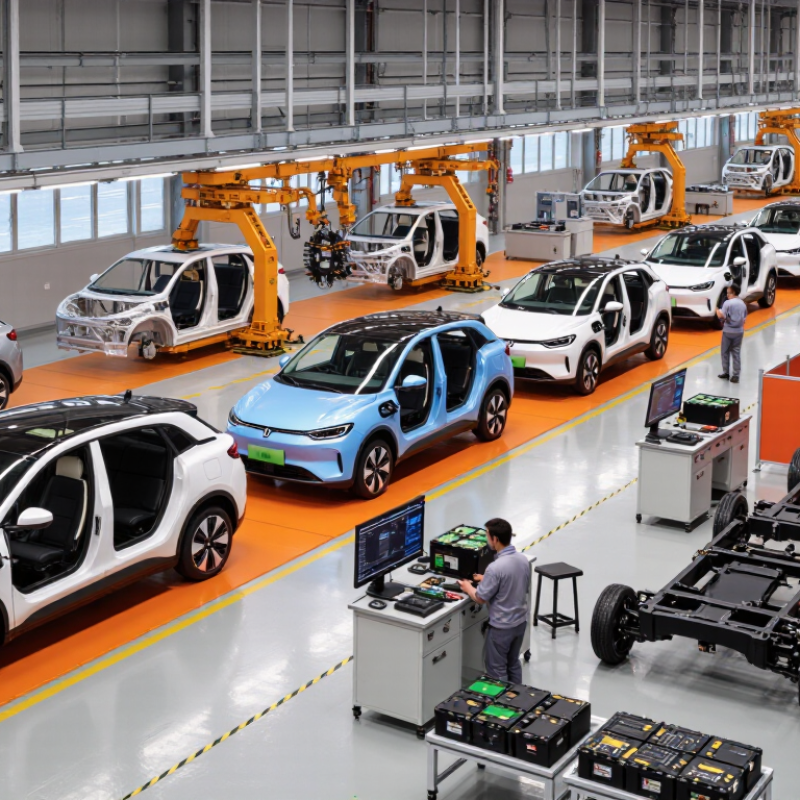
China Top Low Speed EV Manufacturers for Global Buyers?

What Are Low-Speed Electric Vehicles and Who Uses Them?

Low-speed electric vehicles are compact, battery-powered vehicles designed for short trips and controlled environments. Their typical speed ranges from 25 to 45 km/h, depending on local regulations and vehicle design. Unlike standard passenger cars, they often prioritize simple operation, low energy use, and easy maintenance.

Typical users include campus staff, retirement communities, resort operators, farmers, warehouse teams, and families needing neighborhood transport. A small vehicle can carry tools across a farm, move guests between buildings, or reduce walking distances on large sites. Global buyers should examine battery chemistry, charging time, ground clearance, braking performance, weather protection, and spare-parts support. A quiet motor is useful, but poor suspension can make rough roads uncomfortable.

Tips: Map the daily route before choosing a vehicle. Measure slopes, road width, passenger weight, and charging access. Ask for real test data, not only catalog figures. Confirm service procedures and warranty coverage in writing. A model suitable for a flat resort may struggle on a wet rural road. I would not call low-speed EVs universal transport. Their limited speed can reduce flexibility, while cold weather may reduce driving range. That limitation is easy to overlook. A careful buyer should test the vehicle under realistic local conditions before placing a large order.

How China’s Low-Speed EV Manufacturing Industry Is Organized

How China’s Low-Speed EV Manufacturing Industry Is Organized

China’s low-speed EV industry operates through regional manufacturing clusters, rather than one centralized system. Shandong, Jiangsu, Zhejiang, and Guangdong host assemblers, battery suppliers, motor producers, mold factories, and export traders. This structure shortens delivery distances. It also allows small factories to adjust body panels, cabins, and battery packs quickly.

The wider electric-vehicle market provides important context. The International Energy Agency reported around 8 million electric-car sales in China during 2023. The China Association of Automobile Manufacturers recorded 9.495 million new-energy vehicle sales nationwide that year. However, many low-speed vehicles do not enter standard passenger-car statistics. Their classification depends on speed, dimensions, power, road access, and local regulation. Buyers should inspect certificates carefully.

Manufacturing usually follows a modular chain. One supplier produces the chassis, another integrates the motor controller, and a final facility completes testing and export preparation. Lithium battery packs increasingly replace lead-acid systems, according to trends tracked in IEA battery-market reports. Yet cost pressure remains severe. Some producers still prioritize low purchase prices over thermal management and long-term serviceability. That is where due diligence matters.

For global buyers, factory evaluation should include battery traceability, braking tests, water protection, spare-parts access, and warranty procedures. Ask for independent test records. Do not rely only on showroom demonstrations. The industry is efficient, but not perfectly transparent. Regional quality differences remain a practical concern.

Leading Chinese Low-Speed EV Manufacturers for International Buyers

China’s leading low-speed EV manufacturers serve international buyers with practical, cost-focused vehicles. Their factories often produce compact utility carts, neighborhood vehicles, and small transport models. Many offer left-hand or right-hand driving layouts, depending on destination markets.

A serious buyer should inspect battery chemistry, motor ratings, charging systems, braking performance, and frame protection. Factory documentation matters as much as the vehicle itself. Ask for test reports, production photos, spare-parts lists, and clear warranty terms.

Some manufacturers can adjust seating, cargo space, lighting, and dashboard functions for local users. Customization sounds attractive, but it may increase testing time and maintenance difficulty.

Start with a small trial order.

Independent pre-shipment inspection can reveal loose wiring, uneven paint, weak door seals, or inconsistent battery labels. These details are easy to miss in online meetings. Buyers must also verify local speed limits, road-use rules, import documents, and charging requirements before payment. Chinese suppliers may provide strong engineering support, yet communication can still become slow after delivery. This is a real weakness worth planning for. A regional service partner, translated manuals, and stocked replacement parts can reduce downtime. No factory should be judged by price alone. Reliability appears in repeated inspections, transparent records, and how problems are handled when the first shipment is imperfect.

How to Compare Models, Performance, Safety, and Manufacturing Quality

China Top Low Speed EV Manufacturers for Global Buyers?

Comparing low-speed EVs requires more than checking range and price. The IEA’s Global EV Outlook 2025 reports that global electric car sales exceeded 17 million in 2024. This wider growth increases buyer expectations, even for neighborhood vehicles. Examine usable battery capacity, payload, gradeability, turning radius, and charging time. Ask whether performance data comes from independent tests or showroom estimates. Range claims still make me cautious. Cold temperatures, hills, passengers, and frequent stops can reduce real distance sharply.

Safety and manufacturing quality deserve equal attention. Request battery test records, cell traceability, insulation checks, brake performance results, and end-of-line inspection data. UN Regulation No. 100 provides a useful reference for electric powertrain and rechargeable battery safety. ISO 9001 certification can support process control, but it does not prove every vehicle is reliable. Check weld consistency, cable protection, door alignment, waterproofing, and software update procedures. A clean factory floor is helpful, not conclusive. The real question is whether defects are measured and corrected.

Tips: Compare identical test conditions. Record range at full load and moderate speed. Review warranty exclusions carefully. Ask for production-batch photos and serial-number traceability. Inspect one vehicle after delivery, not only during a polished factory tour. Independent inspection costs money, but one missed battery or brake issue costs more. A spreadsheet can still lie. Product evidence matters more than confident sales language.

Export Requirements, Supplier Verification, and Global Purchasing Factors

China’s low-speed EV sector attracts global buyers with compact vehicles, simple drivetrains, and competitive production costs. The IEA’s Global EV Outlook 2024 reported almost 14 million electric car sales worldwide in 2023. However, that figure mainly covers passenger cars, not every low-speed vehicle category. Buyers must define the vehicle class before requesting quotations.

Export compliance starts with destination-country rules. A vehicle may require type approval, speed restrictions, lighting certificates, electromagnetic compatibility testing, and battery documentation. Lithium batteries shipped internationally generally need UN 38.3 testing records. In Europe, classification may involve L-category vehicle rules, while the United States uses different federal and state requirements. HS codes, customs valuation, certificates of origin, and local labeling also deserve attention. Requirements change. Check them again.

Tips:

Request the full specification sheet, not a sales brochure. Verify motor power, battery chemistry, charger input, braking distance, waterproof rating, and payload. Ask for recent test reports issued by an accredited laboratory. A factory audit should review serial-number records, incoming battery inspection, welding quality, and final road testing. ISO 9001 helps, but it does not prove vehicle compliance. A polished factory video proves little. I would also order a sample unit before placing a large purchase. One sample can still mislead, but skipping it creates a larger blind spot. Supplier references, warranty terms, spare-parts availability, and response times should be documented in the contract. Industry data shows strong EV demand, yet low-speed EV purchasing remains highly dependent on local regulation and after-sales capability.