Top 5 Solar Absorber Technologies to Watch in 2025 for Renewable Energy
As the world increasingly shifts towards renewable energy solutions, solar technology continues to evolve, offering innovative ways to harness the power of the sun. Among the various components that contribute to the efficiency of solar energy systems, solar absorbers play a crucial role. These materials are responsible for converting sunlight into usable energy, thereby influencing the overall performance and effectiveness of solar panels and thermal systems. As we look ahead to 2025, several emerging solar absorber technologies promise to enhance energy capture and conversion rates, making them significant players in the renewable energy landscape.
This article will delve into the top five solar absorber technologies set to make an impact in the coming years. By exploring advancements in materials, design, and integration techniques, we will highlight how these innovations can drive the efficiency of solar energy systems. With a growing emphasis on sustainability and renewable resources, the development of effective solar absorbers is more critical than ever. Understanding these technologies will not only illustrate their potential but will also underscore the importance of continued research and investment in solar energy as a key component in the fight against climate change.

Top Solar Absorber Technologies: An Overview of Current Innovations
As the renewable energy sector grows, so does the innovation surrounding solar absorber technologies. Current advancements focus on maximizing efficiency and minimizing costs, which are crucial for the global transition to sustainable energy. According to a report by the International Renewable Energy Agency (IRENA), the efficiency of solar absorbers is projected to increase significantly, potentially reaching over 30% by 2025 due to advancements in material science and nanotechnology.
Among the most notable innovations are selective absorbers, which enhance solar energy conversion by allowing for more effective heat retention. Research indicates that these materials can achieve absorptivity levels exceeding 95%, significantly improving the performance of solar thermal systems. Furthermore, composite materials combining metals and nanostructures are being explored to create lightweight yet efficient absorbers, which can broaden the application spectrum in various environments.
Moreover, optical coating technologies are evolving, providing new ways to manipulate solar radiation and improve the thermal energy conversion process. These advancements not only aim to increase energy capture but also to reduce heat loss, which is vital for enhancing overall system performance. As these technologies continue to develop, they will play a pivotal role in driving down costs and increasing the viability of solar energy as a primary power source for the future.
Efficiency Metrics: Comparing Solar Absorbers in the Renewable Market
The efficiency of solar absorbers is critical in determining the viability and performance of renewable energy systems. Key metrics such as conversion efficiency, thermal stability, and selective absorption capabilities are essential for comparing the latest technologies in the market. As the demand for sustainable energy solutions increases, these metrics will guide advancements in solar absorber technologies, ensuring they can capture and convert solar energy more effectively.
Emerging solar absorber technologies are exploring innovative materials and designs to significantly enhance performance. For instance, nano-structured materials are being developed to improve light absorption while reducing thermal losses. Similarly, hybrid systems combining different types of absorbers may provide broader spectral sensitivity, allowing for more energy capture throughout the day. These advancements are set to play a crucial role in driving efficiency gains, making renewable solar energy a more attractive option for both residential and industrial applications in the near future.
Materials Science: Key Developments in Solar Absorber Efficiency
The field of solar energy is rapidly evolving, driven by significant advancements in materials science that enhance the efficiency of solar absorbers. As we approach 2025, several cutting-edge technologies are emerging that promise to transform how solar energy is harnessed. One notable development is the use of perovskite materials, which have demonstrated a remarkable ability to absorb sunlight more effectively than traditional silicon-based solar cells. Reports suggest that perovskite cells have achieved efficiency rates exceeding 25%, a substantial increase from the 20% typically seen in conventional technologies. This enhanced performance is largely attributed to the unique crystal structure of perovskites, which allows for better light absorption and charge carrier mobility.
Another important trend is the integration of nanomaterials and coatings that further boost absorber efficiency. Recent studies indicate that incorporating nanostructured surfaces can significantly reduce reflection losses and enhance light trapping, leading to efficiencies as high as 30% for advanced solar technologies. The development of tandem solar cell configurations, utilizing both perovskites and traditional silicon, is also gaining traction, with projections indicating that such hybrids could reach efficiencies over 35% by 2025. These innovations represent a key shift in the renewable energy landscape, yielding not only higher energy conversion rates but also paving the way for more economical and sustainable solar power systems.
Top 5 Solar Absorber Technologies to Watch in 2025 for Renewable Energy
| Technology |
Efficiency (%) |
Material Type |
Development Stage |
Projected Cost (USD/m²) |
| Perovskite Solar Cells |
25 |
Perovskite |
Advanced R&D |
50 |
| Bifacial Panels |
20-25 |
Silicon |
Commercial |
70 |
| Thin-Film Solar Cells |
17 |
Cadmium Telluride |
Mature |
60 |
| Concentrated Solar Power (CSP) |
30 |
Various |
Pilot Projects |
200 |
| Organic Photovoltaics (OPV) |
15 |
Organic Compounds |
Emerging |
30 |
Cost Analysis: Economic Factors Driving Solar Absorber Adoption
As the world increasingly turns to renewable energy, solar absorber technologies are gaining traction due to their ability to harness solar energy efficiently. The economic factors driving the adoption of these technologies are compelling, particularly as advancements in materials and manufacturing processes help to decrease costs. By 2025, the integration of innovative solar absorbers is expected to become more economically viable, prompting wider acceptance among consumers and businesses alike.
One critical aspect in the cost analysis of solar absorbers is the reduced levelized cost of electricity (LCOE). This metric measures the average cost of generating electricity by taking into account capital expenses, operational costs, and the system's lifespan. As solar absorber technologies evolve, efficiency improvements lead to lower electricity costs, making solar energy more competitive against traditional energy sources. Additionally, government incentives and subsidies are further propelling this trend by alleviating initial investment burdens for users.
Tips for those considering solar absorber technologies include evaluating their long-term energy savings versus upfront costs and researching local policies that support solar adoption. Moreover, potential users should stay informed about the latest innovations in solar technology, as advancements can significantly impact overall performance and cost-efficiency. By understanding these economic factors, consumers can make educated decisions that align with their financial goals and sustainability initiatives.
Future Trends: Predicting Solar Absorber Technologies for 2025
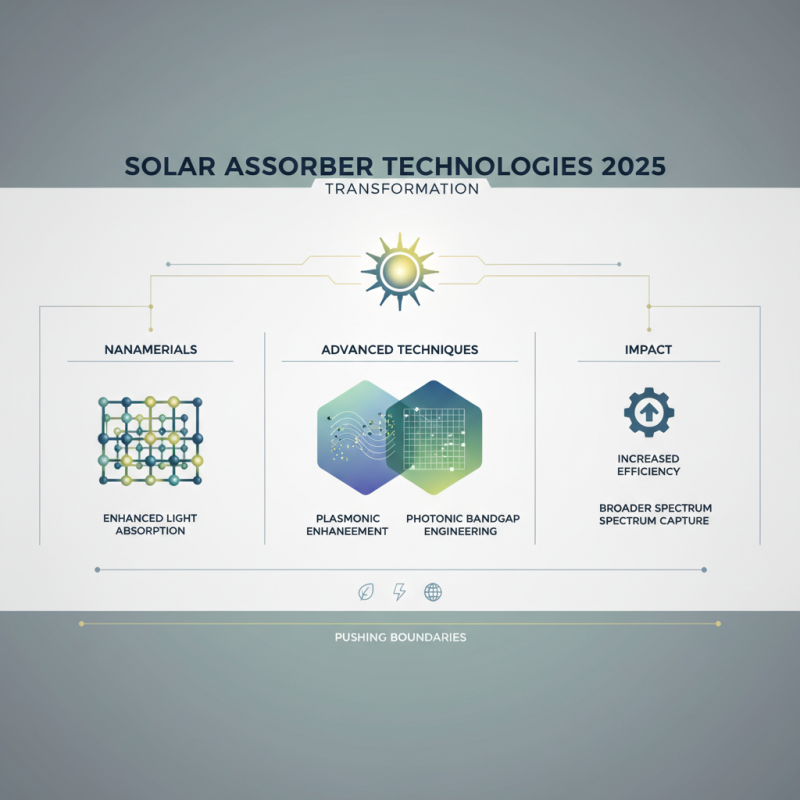
As we look towards 2025, the landscape of solar absorber technologies is poised for significant transformation. One of the most promising trends is the development of nanostructured materials that enhance light absorption. These advanced materials can be engineered at the nanoscale to capture a broader spectrum of solar wavelengths, leading to increased efficiency in energy conversion. By utilizing techniques such as plasmonic enhancement and photonic bandgap engineering, researchers are creating solutions that push the boundaries of traditional solar absorber capabilities.
In addition to material innovations, integration with smart technologies is expected to play a crucial role in the future of solar absorbers. The advent of artificial intelligence and machine learning can optimize energy harvesting processes by predicting solar irradiance and adjusting the system parameters accordingly. Furthermore, the incorporation of IoT devices promises to enable real-time monitoring and maintenance, ensuring that solar absorber systems operate at peak performance. This combination of material science and digital technology brings forth a new era of smart solar solutions, potentially revolutionizing the renewable energy sector by making solar power more accessible and efficient than ever before.