1-906-774-0098

Top Solar Thermal Energy Manufacturers in China

China’s solar thermal energy industry covers a varied range of products, from rooftop water-heating systems to large collector fields for commercial and industrial use. Manufacturers may specialize in flat-plate collectors, evacuated-tube designs, storage tanks, controls, or complete system integration. These differences matter. A company suited to residential installations may not meet the needs of a factory, hotel, or district heating project.

This guide introduces notable manufacturers in China and offers a practical starting point for comparing them. It considers product focus, manufacturing experience, technical documentation, testing information, customization, and after-sales support. Buyers should also review project references and confirm that specifications match local climate, installation conditions, and operating requirements. Details matter. A polished product page alone cannot establish performance in the field, and company claims should be checked against current documents and direct discussions. That is an important limitation of any overview. Manufacturer capabilities can change, while project outcomes depend on design, installation, maintenance, and site conditions. Use the profiles to narrow a shortlist, then request drawings, warranty terms, and verifiable references before making a decision. The strongest choice is not always the largest supplier; it is the one whose documented capabilities fit the project. A careful comparison takes time, but it can prevent mismatched equipment and costly revisions.
Top Solar Thermal Energy Manufacturers in China

Solar Thermal Energy and Its Role in China’s Energy Industry

Solar thermal energy turns sunlight directly into useful heat, rather than electricity. In China, rooftop collectors can warm water for homes, hotels, and public buildings, while larger systems can support district heating and industrial processes. The IEA Solar Heating and Cooling Programme’s Solar Heat Worldwide 2024 reports

about 542 GWth of solar-thermal capacity operating worldwide, producing roughly 442 TWh of heat each year.

China is the largest national market for solar water heating. That matters.

Its value is practical: a hot-water tank stores heat for cloudy hours, and solar heat can reduce the fuel used by conventional boilers. In factories, collectors may serve steady, lower-temperature needs such as washing or preheating water. Concentrating solar-thermal plants can also store heat for later power generation. Yet the fit is not automatic. Roof area, winter sunlight, storage space, and process temperatures all shape performance. The awkward part is seasonal mismatch: strong summer output may not meet winter heating demand. Solar thermal can strengthen China’s energy mix, but each project needs careful engineering and honest performance monitoring.

How Solar Thermal Systems Convert Sunlight into Usable Heat

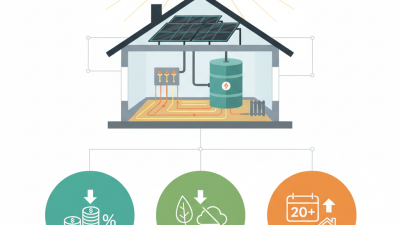
Solar thermal systems turn sunlight into heat rather than electricity. A collector on a roof absorbs solar radiation through a dark surface. In many designs, a water-and-glycol fluid moves through narrow channels, carrying heat indoors. Some systems use evacuated tubes; others use flat plates. Both need suitable placement and careful sizing.

The heated fluid passes through a heat exchanger, which transfers energy to water in an insulated storage tank. A shower tap may then draw that stored hot water hours after the sun has weakened. Simple, but not effortless. Pumps and controls keep circulation within a useful temperature range, while insulation limits heat loss. In colder regions, glycol can help protect the collector loop from freezing. The household water and collector fluid usually remain separate.

Actual output changes with cloud cover, roof direction, shading, and daily hot-water use. A small shadow from a vent can reduce performance more than expected. This is easy to overlook. Manufacturers in China produce varied collector and storage configurations, but product labels alone cannot predict a building’s results. A qualified assessment should consider local weather, roof structure, pipe distance, and backup heating needs. Even a well-designed system may need an electric or fuel-based heater during long stretches of poor sunlight.

How Solar Thermal Systems Convert Sunlight into Usable Heat

Solar collectors absorb sunlight and transfer the resulting heat to a fluid for direct use or storage. The chart shows indicative operating temperature ranges in °C; actual temperatures depend on sunlight, ambient conditions, collector design, and system operation.

Major Solar Thermal Energy Manufacturers in China

Major Solar Thermal Energy Manufacturers in China

China’s major solar thermal manufacturers serve three broad markets: household water heating, commercial heat, and utility-scale power. Many factories produce evacuated-tube or flat-plate collectors, storage tanks, pumps, and control units. Details matter. Collector performance depends on sunlight, ambient temperature, installation angle, and hot-water demand—not just advertised efficiency.

Some manufacturers also supply concentrating solar thermal equipment. Mirrors focus sunlight onto receivers, producing heat for industrial processes or thermal storage. These systems require careful site planning and reliable controls. A polished catalog is not enough. Buyers should review independent test data, warranty terms, component specifications, and access to replacement parts. Factory audits can also reveal how consistently collectors and tanks are assembled.

Capabilities vary widely between manufacturers, even when product descriptions sound similar. Ask for operating data from projects in climates comparable to the intended site. Check whether the supplier can explain heat losses, maintenance needs, and seasonal output in plain terms. One limitation remains: published figures may not reflect real-world installation conditions. Comparing complete system performance, rather than collector price alone, gives a more dependable picture.

Top Solar Thermal Energy Manufacturers in China - Major Solar Thermal Energy Manufacturers in China

Manufacturer Segment Main Product Types Core Components Typical Applications Key Evaluation Factors
Flat-plate collector manufacturers Glazed flat-plate solar collectors and packaged solar water-heating systems Absorber plate, transparent cover, insulated casing, and fluid channels Domestic hot water, hotels, schools, and other buildings with steady hot-water demand Collector efficiency, weather resistance, heat-loss control, system design, and installation quality
Evacuated-tube collector manufacturers Evacuated-tube collectors and solar water-heating systems Glass tubes with evacuated spaces, absorbers, manifolds, and system storage tanks Residential hot water and larger building systems, including installations in colder conditions Tube and manifold construction, freeze protection, maintenance access, and compatibility with storage
Solar hot-water system integrators Integrated collector, tank, pump, controller, and auxiliary-heating packages Collectors, insulated storage, circulation equipment, controls, and backup heat source Homes, apartment buildings, public facilities, and commercial hot-water systems System sizing, controls, safety features, energy performance, and service support
Industrial solar-heat suppliers Solar thermal collector fields and process-heat systems Collector arrays, piping, heat exchangers, thermal storage, and monitoring controls Preheating water or fluids for suitable industrial processes and commercial facilities Required process temperature, load profile, available site area, integration, and thermal storage needs
Concentrated solar-thermal equipment manufacturers Concentrating collectors and equipment for solar-thermal power systems Reflectors or mirrors, receiver systems, tracking equipment, heat-transfer circuits, and thermal storage Utility-scale solar-thermal electricity generation and selected high-temperature heat applications Optical performance, tracking accuracy, receiver durability, storage design, and project integration

Solar thermal systems collect solar radiation as heat. Product suitability depends on local climate, required water or process temperature, demand profile, installation conditions, and applicable testing standards.

Products, Technologies, and Applications Across the Market

China’s solar thermal market covers flat-plate collectors, evacuated-tube units, concentrating systems, storage tanks, heat exchangers, and control equipment. Product choices depend on climate, water quality, roof space, and required delivery temperature. Flat-plate collectors are common in homes and hotels, where they can preheat water for daily use. Evacuated tubes reduce heat loss in colder conditions, though installation quality still matters. Concentrating systems use mirrors to focus sunlight and can supply higher-temperature heat for industrial processes. Not interchangeable.

Applications range from rooftop hot-water systems to process heating in food production, textile treatment, and agricultural drying. A factory may need steady heat through cloudy periods, so tank capacity and backup arrangements deserve careful review. Small details matter. Pipe insulation, pump controls, and scale buildup can affect real-world performance as much as collector specifications. Buyers can compare tested output, operating-temperature ranges, warranty terms, and available maintenance support. One awkward gap remains: product catalogs may show ideal test results but offer little field data for a particular site. The gap is real. Asking for operating records from similar climates can make comparisons more reliable, though those records may not capture every local condition.

How to Compare Chinese Solar Thermal Manufacturers

Comparing Chinese solar thermal manufacturers takes more than comparing collector prices. The IEA Solar Heating and Cooling Programme’s Solar Heat Worldwide 2024 report records about 21.8 GWth of new solar thermal capacity worldwide in 2023. China is a major market, but a supplier’s scale alone cannot verify a particular product’s performance. Real conditions matter.

Ask for test reports based on ISO 9806, the international standard for solar thermal collector testing. Compare efficiency curves, pressure drop, stagnation temperature, and output per square metre using the same measurement basis. Check whether quoted area means gross area or aperture area; the difference can distort price comparisons. Request independent test results, not just catalogue figures. No brochure can settle that.

Then assess how the equipment fits the project. Compare materials, freeze protection, corrosion resistance, storage-tank compatibility, controls, and warranty exclusions. Ask for references from installations with similar climate, water quality, and heat demand. Review serial-number traceability and factory quality records, and arrange a production inspection when order size justifies it. These checks take time. They can still miss problems, especially when long-term operating data is unavailable. Note that limitation before choosing a supplier.