What Are the Best Solar Systems from China?
Choosing the best solar systems from China requires more than comparing factory prices. Performance, reliability, warranties, and service support matter equally.
China has become the central force in global solar manufacturing. According to IRENA’s Renewable Capacity Statistics 2024, China added approximately 216.9 gigawatts of solar photovoltaic capacity in 2023. The IEA’s Renewables 2024 report expects China to deliver almost 60% of global renewable capacity growth through 2030. These figures demonstrate extraordinary scale. They do not automatically prove that every Chinese system is dependable.
Small details matter. A rooftop system should match local sunlight, temperature, roof structure, and electricity rules. Buyers should examine module degradation rates, inverter efficiency, battery safety, certification, and warranty enforcement. An inexpensive panel can become costly if replacement parts arrive slowly. This is where many comparisons become incomplete. Price alone is a weak shortcut.
Jenny Chase, BloombergNEF’s leading solar analyst, has said, “Solar is going to be the cheapest source of electricity in most places in the world.” Her observation explains the market’s momentum, but affordability must still be tested against real operating conditions. The best solar systems combine efficient modules, stable inverters, transparent testing, and responsive after-sales support. Brand reputation helps. Independent evidence matters more.
This guide compares major Chinese solar solutions through those practical measures. It will consider efficiency, durability, storage compatibility, monitoring tools, and long-term value. The ranking cannot be perfect. Climate, installation quality, and local service can change the result. That uncertainty deserves honest attention.
What Defines a High-Quality Solar System from China?
A high-quality solar system from China should be judged by evidence, not attractive pricing. Reliable systems use modules with stable output, strong frame construction, and verified performance data. Check certifications such as IEC testing, factory quality records, and product traceability. These details make claims easier to verify.
The inverter also deserves careful attention. It should manage voltage changes, heat, dust, and grid conditions safely. Look for a suitable IP rating, clear monitoring data, and a realistic efficiency guarantee. Battery systems need thermal protection, tested cycle performance, and compatible communication controls. A long warranty sounds reassuring, but its service terms matter more. Confirm who handles repairs, replacement parts, and technical support in your market. I have seen buyers focus on panel efficiency while ignoring installation quality. That mistake can reduce real energy production.
Tips: Request independent test reports, not only factory brochures. Compare temperature coefficients, degradation rates, and warranty exclusions. Ask for installation photos from similar climates. A practical inspection is valuable. Also, leave space for ventilation around inverters and batteries. Dust is easily forgotten. Finally, calculate performance using your roof angle, shading, local sunlight, and seasonal weather. Even excellent equipment will underperform when the design is rushed. I would also recheck the forecast before purchasing, because projected savings are never perfectly certain.
Which Types of Chinese Solar Systems Are Available?
Chinese solar systems are available in several practical forms, each suited to a different energy pattern.
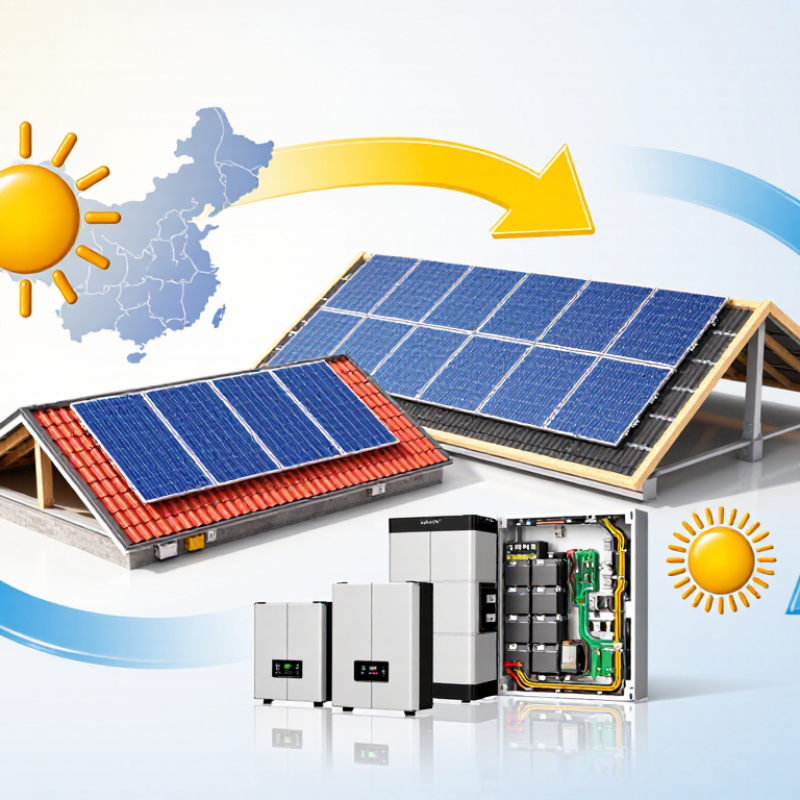
Grid-tied systems connect photovoltaic panels to the public electricity network. They usually reduce daytime bills but may shut down during a blackout unless backup equipment is installed. A typical home system includes panels, an inverter, mounting rails, protection devices, and monitoring software.
Hybrid systems combine solar panels, battery storage, and grid access. They can store midday electricity for evening cooking, lighting, or refrigeration. Some systems allow batteries to charge from the grid during approved periods. This flexibility is useful where power prices change throughout the day.
Battery size matters. A small battery may support lights and internet equipment, but not an electric heater for long.
Off-grid systems operate independently from utility networks. They suit remote homes, farms, communication cabins, and construction sites. Designers must calculate winter sunlight, appliance starting currents, and several cloudy days. Portable solar generators are smaller options for camping or emergency charging. They often include folding panels, a battery pack, and multiple output sockets.
I once assumed a larger battery always meant better value. That was too simple.
Oversized storage can remain underused and increase replacement costs. Reliable selection requires checking test reports, warranty terms, inverter efficiency, weather resistance, and local electrical requirements. Professional installation also matters, especially for rooftop loads, grounding, ventilation, and fire-safe battery placement. Performance claims should be compared with measured conditions, not only laboratory figures.
How to Compare Efficiency, Durability, and System Performance
Choosing a solar system from China requires more than comparing panel efficiency. The IEA PVPS Trends 2024 report recorded 216.9 gigawatts of new solar capacity in China during 2023. This scale supports strong manufacturing experience, but it does not guarantee equal system quality. Check the complete design: modules, inverters, mounting hardware, wiring, monitoring, and installation practices.
Efficiency should be measured at system level. A module rated above 22% may still deliver modest output under heat, dust, shading, or weak ventilation. The Fraunhofer ISE Photovoltaics Report shows that temperature can significantly reduce crystalline-silicon module output. Ask for temperature coefficients, low-light data, and a predicted annual yield. Compare performance ratio, not only peak wattage. A clear roof map is useful.
Durability needs evidence. NREL’s widely cited degradation review found a median crystalline-silicon module degradation rate near 0.5% per year. Request independent test results, IEC certification, mechanical-load data, and warranty conditions. Inverters deserve equal attention because they often face higher thermal stress. Look for protection ratings, replaceable components, remote fault records, and local service capacity. A spreadsheet can mislead. I would also inspect cable routing and connector seating on site, because small installation errors can erase theoretical efficiency. The uncomfortable point is simple: the cheapest system may perform well initially, yet cost more after one unnoticed failure.
What Are the Best Solar Systems from China? - How to Compare Efficiency, Durability, and System Performance
Representative specifications for commonly available Chinese solar system configurations. Actual performance depends on component selection, climate, installation quality, and operating conditions.
| System Configuration |
Typical Application |
Rated System Size |
Module Efficiency |
Inverter Maximum Efficiency |
Battery Usable Capacity |
Operating Temperature |
Expected Service Life |
Performance Assessment |
| Residential Grid-Tied System |
Homes with stable utility-grid access and limited daytime shading |
3–10 kW |
20%–23% |
97.0%–98.6% |
Not included |
Approximately −20°C to 60°C for the inverter |
Modules: 25–30 years
Inverter: 10–15 years |
High efficiency and low operating cost |
| Residential Hybrid System |
Homes requiring backup power and higher self-consumption |
5–15 kW |
20%–23% |
96.5%–98.5% |
80%–95% depth of discharge |
Approximately −20°C to 55°C for the inverter |
Modules: 25–30 years
Battery: 10–15 years |
Strong flexibility and backup capability |
| Small Commercial Rooftop System |
Shops, offices, warehouses, and other daytime-load facilities |
20–100 kW |
20%–23.5% |
97.5%–98.8% |
Optional; commonly 1–4 hours of rated output |
Approximately −25°C to 60°C for the inverter |
Modules: 25–30 years
Inverter: 10–20 years |
Good balance of yield, durability, and cost |
| Commercial Hybrid System |
Facilities needing peak shaving, backup power, or demand management |
100–500 kW |
20%–23.5% |
97.5%–98.8% |
80%–95% depth of discharge |
Approximately −20°C to 55°C for power electronics |
Modules: 25–30 years
Battery: 10–15 years |
High control capability with added complexity |
| Utility-Scale Ground-Mounted System |
Large solar farms with available land and grid interconnection |
1–200+ MW |
20%–23.5% |
98.0%–99.0% |
Optional; sized according to grid requirements |
Approximately −30°C to 60°C for central or string inverters |
Modules: 30 years or more
Inverter: 15–25 years |
High energy yield and scalable deployment |
| Off-Grid Solar and Storage System |
Remote homes, telecommunications sites, farms, and isolated facilities |
1–50 kW |
19%–23% |
94%–98% |
80%–95% depth of discharge |
Approximately −20°C to 55°C for the inverter |
Modules: 25–30 years
Battery: 5–15 years |
Reliable when correctly sized for seasonal demand |
Comparison note: Module efficiency indicates how much sunlight is converted into electricity under standard test conditions. Inverter efficiency does not represent total system efficiency because wiring losses, temperature effects, battery losses, soiling, shading, and grid limitations also affect annual energy production. For durability, check certified testing, ingress protection, corrosion resistance, temperature range, degradation warranty, product warranty, and local service support.
Which Chinese Solar Brands and Components Are Widely Recognized?
Chinese solar brands are widely recognized for high-volume manufacturing, competitive pricing, and improving technical performance. The strongest manufacturers usually offer high-efficiency monocrystalline modules, stable inverters, and detailed production records. Recognition should come from independent testing, not advertising alone.
In practical system reviews, module quality often depends on cell consistency, temperature performance, and resistance to humidity. Look for IEC certification, credible factory audits, and transparent degradation warranties. Inverters need reliable cooling, clear fault codes, remote monitoring, and local technical support. Battery systems require careful checks of cell chemistry, thermal management, cycle ratings, and safety certifications.
Mounting structures also matter. Corrosion-resistant aluminum or coated steel can protect rooftop systems for years. Chinese suppliers with documented export experience often provide complete engineering packages, spare parts, and installation guidance. Still, a famous factory does not guarantee every product batch. Field performance may differ from laboratory results. Warranty language can be difficult, especially after international shipping. Some technical documents also feel incomplete or poorly translated.
A dependable purchasing review should compare test reports, warranty coverage, installer feedback, and replacement procedures. Ask for serial-number verification and recent independent inspection records. The lowest quotation may hide weaker monitoring or slower service. That is easy to overlook.
What Factors Should Buyers Consider Before Choosing a System?
Choosing a solar system from China requires more than comparing panel prices. Buyers should examine performance, safety, service, and long-term suitability for their property.
Start with your electricity bills, roof direction, shade patterns, and local weather.
A system sized from guesswork may produce disappointing results. Check panel efficiency, temperature performance, inverter quality, and battery cycle life. Ask for independent test reports and certification under recognized international standards. Local electrical codes still matter. They should not be treated as optional paperwork.
Review the supplier’s manufacturing experience, quality-control process, and written warranty terms.
A clear warranty should explain coverage, exclusions, labor, shipping, and claim procedures. Confirm whether replacement parts are available in your country. Technical support should respond through traceable channels, not only informal messages.
I once underestimated roof loading during an assessment. That mistake showed why structural inspection deserves early attention. Small details become expensive later.
Buyers should also calculate the complete cost, including installation, permits, monitoring, maintenance, and battery replacement.
A lower quotation can hide weaker protection equipment or limited after-sales support. Request system drawings, production estimates, and references from comparable installations. Then compare those documents carefully. Be skeptical of guaranteed output claims. Sunlight changes, and real roofs are rarely perfect. The most suitable system is not always the largest or cheapest one.