1-906-774-0098

Top 10 Types of Water Solar Panels for Global Buyers

Water is becoming more than a place for cooling and transport. It is becoming a platform for energy generation.

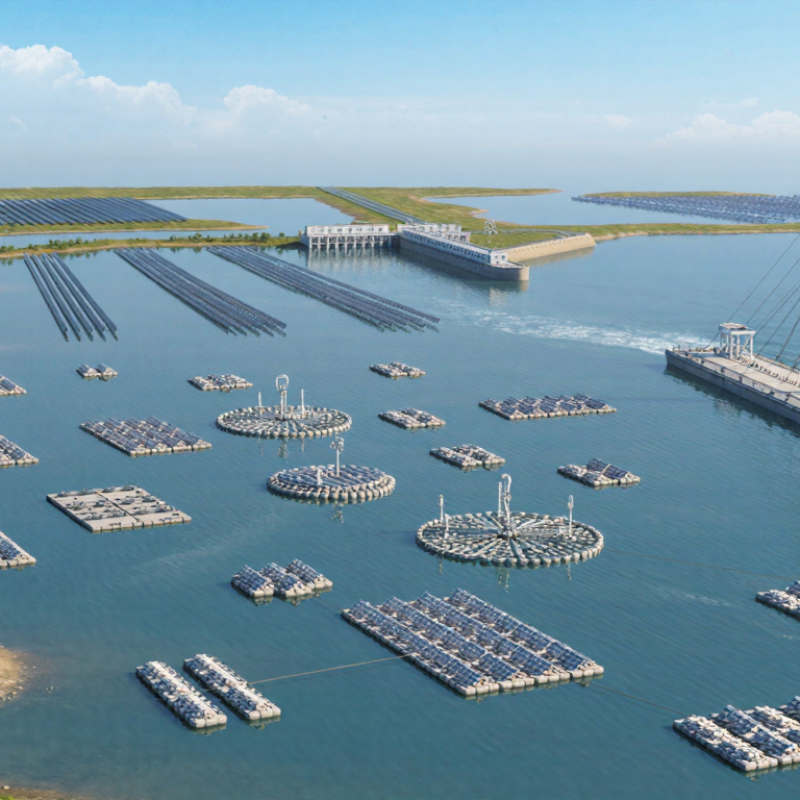
This guide examines the top 10 types of water solar panels for global buyers. The phrase “water solar panel” usually describes floating photovoltaic systems installed on reservoirs, ponds, canals, lakes, or sheltered coastal waters. Each setting creates different engineering demands. Wave movement matters. Wind matters. So does water quality. A calm irrigation pond is not an offshore site.

Dr. Thomas Reindl, Deputy CEO of the Solar Energy Research Institute of Singapore, has emphasized that “floating solar is not simply solar on water.” The system must manage anchoring, corrosion, maintenance, and ecological conditions together. That perspective is important for serious buyers. Panels, floats, inverters, mooring lines, and access routes must work as one system. A low price can hide higher maintenance costs later.

The ten types include reservoir-based platforms, industrial pond systems, canal-mounted arrays, modular pontoon designs, tracking floating solar, hybrid hydropower projects, aquavoltaic systems, offshore floating solar, nearshore installations, and movable modular units. Their differences are practical. Some reduce evaporation. Some use existing grid connections. Others face stronger waves and salt exposure. Not every design fits every climate.

The market is promising. It is not effortless.

Buyers should compare load ratings, float materials, anchoring methods, electrical safety, biodiversity impacts, and local maintenance skills. Independent testing also matters. This overview offers a useful starting point, but site surveys remain essential. Water can look calm from the shore and behave differently beneath the platform.
Top 10 Types of Water Solar Panels for Global Buyers

What Water Solar Panels Are and How They Generate Electricity

Water solar panels usually mean floating photovoltaic systems placed on reservoirs, ponds, and calm industrial water surfaces. They are not powered by water. Sunlight creates electricity inside semiconductor cells sealed within a panel.

Each cell absorbs photons and releases electrons, producing direct current. Connected panels send this current to an inverter, which changes it into alternating current for buildings or the grid. Cables run through protected floating walkways or anchored routes. A transformer can then raise the voltage for longer-distance transmission.

The phrase can mislead buyers. Some water-based solar products heat water, while floating photovoltaic panels generate electricity. Common designs include pontoon platforms, membrane floats, modular rafts, and tracking platforms. Their layouts differ, but the electrical principle remains similar. Water may cool the panels and improve output slightly, especially under strong sunlight. Reflections can also increase exposure, though the gain is not guaranteed.

Anchoring is a serious engineering task. Wind, changing water levels, waves, and algae affect reliability. Technicians must inspect cables, connectors, floats, and corrosion points. Maintenance access is often harder than on land. My practical view is cautious: a floating system can use unused surface area, but it is not automatically cheaper or more efficient. Poor site surveys create expensive problems. Water quality and local ecology also need review before installation. Performance should be measured across seasons, not judged from one bright afternoon.

How Water-Based Solar Systems Are Classified by Design and Placement

Water-based solar systems are best classified by design and placement, not by appearance alone. The ten common types include pontoon floating arrays, modular float platforms, membrane-supported rafts, and anchored reservoir systems. Other forms include canal-cover solar, irrigation-pond arrays, quarry-lake systems, wastewater-pond installations, offshore nearshore platforms, and hybrid floating systems with battery containers nearby.

Design determines how panels handle waves, wind, maintenance, and water-level changes. Pontoon arrays suit calm reservoirs and allow walkways for inspections. Membrane systems reduce material weight but may need careful tension control. Canal covers use narrow structures above flowing water, limiting access but reducing evaporation. Offshore and quarry-lake designs require stronger anchoring, corrosion protection, and wider safety margins. Small systems may be simpler, yet they are not automatically safer.

Placement changes the engineering risk. A drinking-water reservoir demands strict material selection and controlled maintenance. Irrigation ponds may face changing water levels and farm-equipment access. Wastewater sites can produce corrosive gases, so electrical enclosures need suitable protection. Field assessments should measure wind, waves, water depth, bank conditions, and grid distance. Engineers should also check shading from nearby trees and the effect on aquatic habitats. One weakness remains: long-term data for some floating designs is limited. Conservative planning is wiser than optimistic production estimates.

Top 10 Types of Water Solar Panels for Global Buyers

Water-based solar systems are commonly classified by their structural design and placement. The chart maps each system type against four defining characteristics: modular floating structures, shore or structure mounting, linear-waterway placement, and integration with existing infrastructure.

A value of 1 indicates that the characteristic is a defining feature of the system type; 0 indicates that it is not the primary classification. The chart is a design-and-placement comparison rather than a company or brand ranking.

The Top 10 Types of Water Solar Panels for Different Applications

Top 10 Types of Water Solar Panels for Different Applications

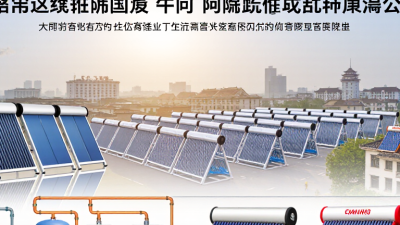
Water solar systems vary by climate, building size, and water quality. Glazed flat-plate collectors suit family homes and hotels with steady sunlight. Unglazed polymer panels work well for swimming pools and seasonal heating. Evacuated-tube collectors deliver stronger performance in cold or cloudy regions. Compound parabolic collectors help where roofs receive limited direct sunlight. Integral collector-storage panels fit small homes with mild winters. Thermosiphon systems are simple choices for remote buildings because they need little electrical control.

Pumped direct systems suit regions without freezing temperatures. Pumped indirect systems use heat-transfer fluid for colder climates.

Drainback systems protect collectors from freezing and overheating during shutdowns. Solar photovoltaic water-heating systems are useful where electricity is more practical than hot-water circulation.

Each design has trade-offs. No panel wins everywhere. Field installers often inspect roof angle, pipe distance, water hardness, and daily demand before choosing equipment. A cheaper collector can perform poorly if maintenance access is ignored.

Tips: Match the collector to the application, not only the purchase price. For pools, prioritize area and durability. For homes, check storage capacity and winter output. In hard-water areas, consider corrosion-resistant components and simple cleaning access. Performance estimates can be optimistic, so request local climate data and realistic seasonal figures.

How to Compare Efficiency, Durability, Cost, and Maintenance

Global buyers compare ten water-solar formats, including floating crystalline, bifacial, flexible thin-film, lightweight, and semi-transparent designs. The label alone proves little. Fraunhofer ISE’s Photovoltaics Report 2024 places commercial crystalline-silicon module efficiency around 20–23%. Real output still falls with heat, shading, and surface dirt. For floating arrays, measure site-specific yield instead of trusting nameplate ratings. Wind, waves, humidity, and anchoring geometry matter.

Durability deserves equal weight. The World Bank’s Where Sun Meets Water report identifies corrosion, mooring failure, and difficult access as major floating-solar risks. Ask for IEC 61215 and IEC 61730 testing, plus salt-mist and mechanical-load results. NREL lifetime research commonly uses approximately 0.5% annual degradation as a planning benchmark for crystalline PV. That figure is useful, not universal. Brackish water may age equipment faster.

Cost comparisons must include pontoons, anchors, cables, inverters, inspections, and repair-related downtime. IRENA reported utility-scale solar PV costs near USD 0.044 per kWh in 2023, about 90% below 2010 levels. Water projects may exceed that benchmark because installation is more complex. Plan monthly visual checks, connector inspections, and periodic electrical testing. Cleaning may be less frequent on water, although bird droppings remain stubborn. I would reject the cheapest quote when maintenance assumptions are vague. Local operating data beats a polished brochure.

Key Buying Factors for Global Water Solar Panel Markets

Top 10 Types of Water Solar Panels for Global Buyers

Global water solar panel markets are expanding beyond simple floating photovoltaic systems. Buyers now compare reservoir floaters, irrigation-pond arrays, canal-top modules, solar water pumps, desalination systems, and marine-ready platforms. IEA PVPS reported global photovoltaic capacity above 1.4 terawatts at the end of 2023. That scale increases pressure on buyers to verify performance, not only purchase price.

Water conditions decide whether a system survives. Freshwater ponds may need different coatings from saline reservoirs. Ask for corrosion tests, insulation ratings, wind-load calculations, and documented material traceability. The World Bank’s ESMAP notes that floating solar can reduce reservoir evaporation, but actual savings depend on coverage, climate, and wind. Do not treat that figure as guaranteed.

Anchoring deserves close inspection. A calm irrigation pond can face sudden storms. Buyers should request site-specific wave studies, buoyancy calculations, and emergency access plans. Check panel efficiency after humidity exposure, inverter protection, cable routing, and maintenance access. IEC testing helps, but it does not replace local engineering review.

Cost comparisons must include transport, mooring installation, cleaning, insurance, grid connection, and replacement parts. IRENA’s Renewable Capacity Statistics 2024 shows solar remains one of the fastest-growing renewable technologies, yet project quality varies widely. A low quotation may hide weak warranties or difficult repairs. This is where buyers often misjudge the market. Use measured pilot data, independent inspection, and realistic degradation assumptions before scaling across borders.